
Why Art is So Important for Some People by Carole Feuerman

Some people are born with a natural tendency to love and admire art. They appreciate the colors in different things around them and develop artistic skills from a young age. These people start to take interest in art, coloring, and painting to fuel their curiosity and then finally form a lasting passion for art. Furthermore, they try to find new ways to practice their art skill and learn about the different range of options they can draw, color, or paint.
Many artists worldwide develop key concepts and enhance their learning of art and how things can be portrayed, examined, or influenced through art. In more ways, they try to take inspiration from anything that they can find and draw it on the canvas. It is not just about drawing or painting for them. Some of these artists can even use stone, clay, or even thrown away garbage to make something interesting. They have a thought process that can quickly comprehends different complicated things and turn them into something interesting. Artists are always confident, responsible, reflective, innovative, creative, and equipped for success. They can use their imagination, expression, and thinking to create some of the most beautiful and thought-provoking masterpieces of art.
The motivation for an Artist
The best motivation for an artist is to take inspiration from different aspects of the world and get influenced by it, whether politics, freedom of expression, culture, social issues, a representation of an idea or an expression, or for just bringing about change. They can express such aspects through the use of art, and people would appreciate them as the most difficult or complicated subjects.
Qualities of an Artist
There are many different qualities of an artist, but the best ones, which are most important are:A deeper understanding of the things and subjects that revolve around them, such as thinking and analytical skills to include critical thinking and problem-solving. Able to present complex and sophisticated subjects more easily through art. Independent ability to analyze and look at things from a different perspective.
Artists view the world differently, which isn’t something which can be done by an average person. However, they need opportunities to develop their art practice, enrich their learning and understanding of the key concepts in art, and use their new skills.
There are many different branches and areas in the art that an artist can choose from, depending upon their abilities. They range from painting, coloring, sketch drawing, sculpture making, photography, digital designing, video, and much more.
Unfortunately, artists around the world are given less importance to their work than they should deserve. They can spend most of their time making the most intriguing artworks, but they may not appreciate it or deserve recognition. The reason is that nowadays, many modern and aesthetic forms in art have been introduced to discard the traditional works of art.
New Opportunities for Artists
However, artists can still accommodate a wide range of skills and abilities by using different concepts to represent their art. They need to enhance their skills abilities in art-making to fully to portray their thought processes successfully to the general public. They can experiment with other ideas in two and three-dimensional processes, take on risks, and challenge themselves to create something awe-inspiring. They can also learn now how to design develop their technical skills through software programs in digital designing and develop improve their artistic style with it. If you want to learn more about art and its fundamental aspects, you can read my inspiring monograph ‘Carole A. Feuerman: 50 Years of Looking Good.’ I am an artist who has made the best use of my skills and abilities with through sculpture. I am one of the three founding members of the hyperrealist movement that began in the late 1970’s and continuing into the present. My career is highlighted by iconic figurative works of swimmers and dancers. I have taught, lectured, and given workshops at the Metropolitan Museum of Art and the Solomon Guggenheim Museum. In 2011, I founded the Carole A. Feuerman Sculpture Foundation. My artworks are owned by eighteen museums, as well as in the collections of the City of Peekskill New York, the City of Sunnyvale California, President and Senator Hillary Rodham Clinton, the Frederic R. Weisman Art Foundation, Dr. Henry Kissinger, the Michael Gorbachev Art Foundation, the Malcolm Forbes Magazine Collection. Feuerman’s public works have been displayed across the globe, including but not limited to: Central Park, and Petrosino Square in New York City, l'Avenue George V in Paris, Harbour City in Hong Kong, Giardino della Marinaressa in Venice, New Bond Street, London and Knokke Heist in Belgium.
How to Make Paintings Look More Realistic
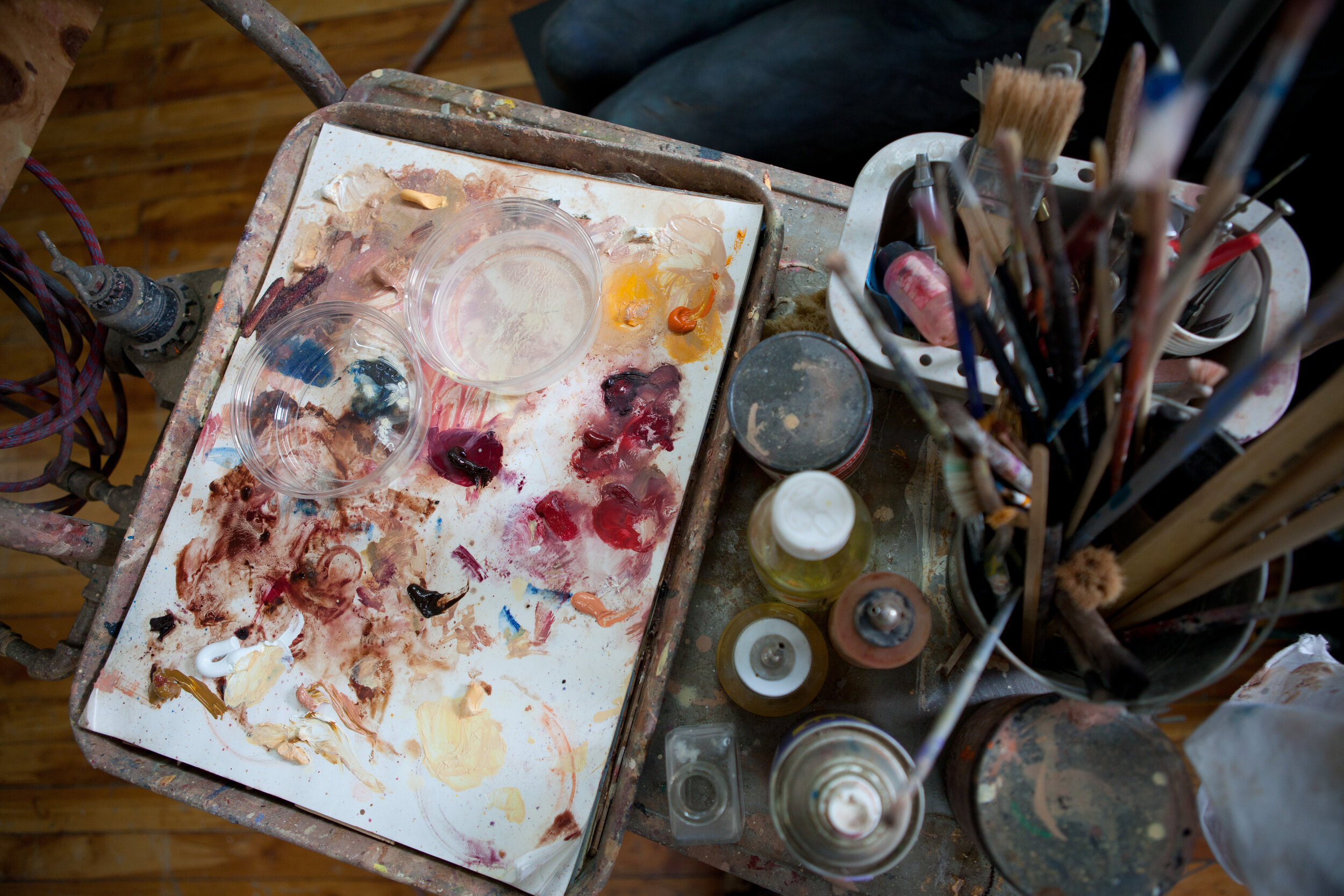
When it comes to painting, if you want to make your work look more realistic, irrespective of the style you paint in, this is what I recommend. If you don’t want people to feel left doubting what you have actually painted, you might want to paint realistically. It is imperative to note that painting realism does not mean senselessly copying what you see. But, it’s about using your creative license to change the subject in the painting while maintaining the quality of realism. Therefore, this article highlights a few essential tips to make paintings look more realistic.
1) Get the Color Values Right
Color values are the most important tip when it comes to creating more realistic paintings. Value in painting is how light or dark a color is, and it is extensively considered to be one of the central elements of a painting. Besides, if you are able to paint with precise values, then your painting will have a quality of realism irrespective of how correct your colors, edges, shapes, and other elements are.
2) Use Soft, Hard, & Lost Edges
In painting, edge transitions from one shape to another, and edges are categorized as hard, soft, or lost. The hard edge is for a crisp transition between two shapes, whereas soft edges have some gradation between the shapes to make the transition smooth. On the other hand, a lost edge where the edge is so soft that you can hardly see it. It usually occurs when there are two shapes next to each other having the same color. Also, lost edges don’t give you much information about the subject form.
3) Focus on The Important
It is suggested to identify a few things that most interest you about the subject you are painting and be extremely specific. It could be the light bouncing off or any impressive shape arrangement. Typically, there are only 1-3 things that really interests you about a subject. So, just focus on painting those things and try to simplify the rest.
4) You Might Not Want Visible Brushwork
Visible brushwork is the most interesting aspect of a traditional painting; however, you will need to learn how to use an airbrush. An airbrush is a small, hand-held instrument connected to a canister of compressed air that sprays paint in a controlled way giving an even and consistent surface. Artists and illustrators often use airbrushing to create a high level of realism.
5) You Will Need to Learn How to Copy from Real Life
It is incredibly helpful to have a model or a still life, or a landscape in front of you while working on your picture. This reference will help you enormously.
6) Question What You See
Sadly, our eyes often play little tricks on us, and what we believe we see is not actually what is there. It is most apparent in color and value. Therefore, question what you see to make your paintings more realistic.
In conclusion, you must learn how to visualize like an artist. Besides, break everything down into fundamental elements like edge, shape, color, and line. For instance, instead of painting just anything, paint the shapes, edges, colors, and lines to make your painting look more realistic.
Why Do We Need Peace Of Mind

Harmony and peace of mind is one of the fundamentals for finding a complete and happy life. Besides, we feel more confident and full of energy when we have inner peace! It’s a state when we are attentive, balanced, and conscious. Being in tough situations or circumstances that are not comfortable for us, we got disturbed, and peace begins to leave us. However, having resumed classes that can help us find inner silence, life gradually improves again. Also, many people pass through this phase and with this we can conclude: “If you don’t have time for rest, it means that it is necessary for you.”
Why do we need peace of mind?
Peace of mind teaches us to be in accord with oneself and with the whole world and talks about striking a balance. If you compare the soul with a musical instrument, then the inner calm state is when the strings of the soul sound naturally and harmoniously. The sound is pleasant and soothing for everyone! But when you are tense and fussy, the music will be unnatural, strained, and unpleasant.
When we have peace of mind, we are full of positive energy and in a good mood! Also, we efficiently manage to resist the sickness and bad attitude of others, and we perform better at doing any work. Peace makes us more creative; we investigate better and solve problems faster. When peace of mind is gone, we get out of balance, and the energy drops, we attract illness and depression. During this internal stress, we do not get much of what we would like, and we commit more mistakes.
Every time we get angry, fuss in vain, or fall into depression, etc., we seem to spill negative energy from our vessel of the soul. When we are happy and balanced, we give off positive energy. Therefore, think twice before the next time, carelessly, you get out of yourself, start to get angry, nervous, think negatively, speak, and fuss about it in vain.
Peace of mind is a natural state for anyone; that’s why it is so essential and desirable for us! When it goes away, we begin to experience uncertainty and discomfort. Besides, on the subconscious mind, we desire to return to this state. Just be yourself or take a walk in the garden to restore spiritual harmony.
Many times, this inner peace is confused with lethargy, apathy or laziness. But it is not the case! You can make an external activity while maintaining inner peace. If you wish to protect yourself from adversities, you have chosen the wrong planet. Instead of protecting yourself from such problems face them with a peace of mind and move on!
How to Relieve Stress with Art?

Although art therapy is its own field, you can also use self-directed art to express your creativity, reduce stress and stay connected to your feelings. Most of us have intuitively understood the power of art since we were young: almost all children know the fun of sculpting things with plastic, drawing things with fingers or drawing with crayons and other materials.
“The aim of art is to represent not the outward appearance of things, but their inward significance.” – Aristotle
From painting to writing and to dancing, creative activities make our life fun and interesting. But do you know that art is so powerful and calming that it can be used as a therapeutic tool? Yes, you heard it right.
According to the American Art Therapy Association (2008), art therapy involves creative processes of art making. It aims to improve physical, emotional, and mental well-being. This applies to people of all ages.
The growing interest in holistic approaches to treatment has increased. This has led to the belief that expressive arts can be effective for overall human health. They contribute to wellness. As mentioned in the Journal of Clinical Psychology, ‘art therapy supplements the biomedical approach. It focuses not only on the symptom and the disorder. It also addresses the holistic nature of the individual.
In addition to random noodling in the blank spaces of the page, if you are like most adults, you may not express yourself in art like you did when you were a kid. You may not think you have any "talent" in artistic creation, or you may not believe it's worth your time, but art is really a valuable pastime. Even for those who don't think they have artistic tendencies, there are many reasons why art is an excellent stress-reducing tool. Therefore, this article highlights how creating art can help reduce stress.
1) Self-Care
Sometimes, because of the responsibilities of our daily lives, we forget that we need and deserve alone time and self-care. Spending a few minutes regularly to focus on a hobby can give you more needs in the field. With art, you have the added benefit of leaving something beautiful (or at least interesting) on display.
2) State of Flow
Some psychologists describe mobility as an activity addiction. Similar to meditation, flow can enhance performance and reduce stress levels. When you practice musical instruments, do sports, garden, write, draw or paint, you may experience flow.
3) Mind Clarity
Creating art can clear your mind off of whatever is stressing you, at least for some time. Also, it's difficult to keep contemplating on your problems, especially when you're focused on creating art. If your issues stay with you, incorporate them into your artwork. Once you are done, you should have a clearer mind with which to tackle your problems again.
4) Sketchbooks
Maintaining a sketchbook is the easiest way to relieve stress. It could be a form of journaling, and like journaling, it can be purifying, stress-relieving and creative.
5) Gratitude
Some people keep a gratitude journal to write what they are grateful for. Therefore, personalize your gratitude journal by sketching the faces of those you love, places you like, or other things that you are thankful for. The process of drawing can be a great stress reliever, and revisiting the creations can also bring you some peace for the future.
In conclusion, if you are still overwhelmed by stress and it starts to obstruct with your daily life, talk to your doctor. They may recommend a therapist who can offer support and techniques for managing the stress.
How Artists Find Peace In The Art
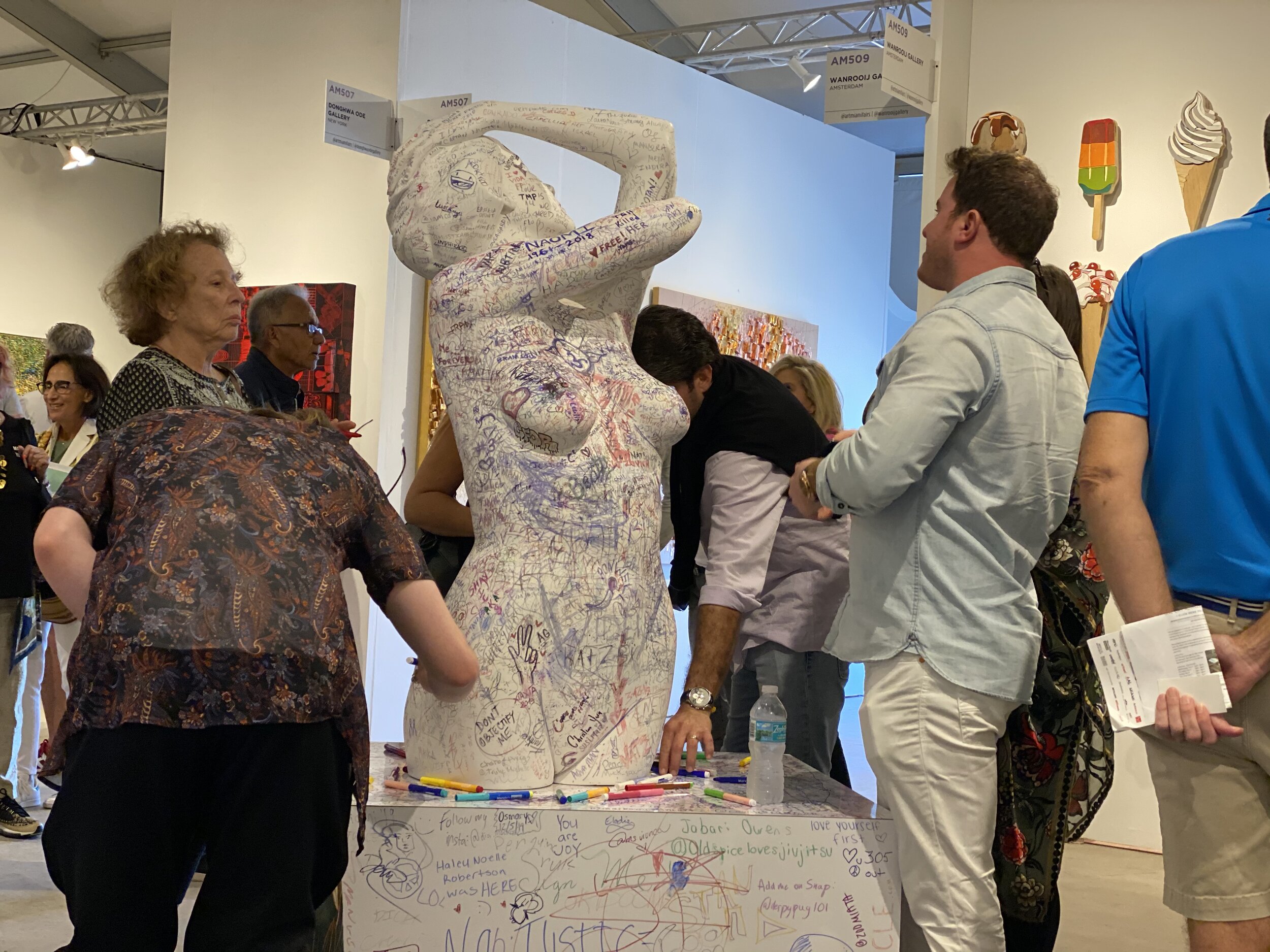
How do you respond to frustrations or setbacks with your work? For people who belong to the art industry, this question is especially important. Many artists work alone, and they keep creating new work. Making new work creates pressure, especially when this involves personal expectations.
The Two Extremes
Every artist tries to produce their best work and to reach different levels of skill. If it's done reasonably, then it's fine. But problems occur when artists attach their well-being to the outcome. It creates a desire for reward or recognition of some sort. And such artists put their work into the world for authentication from someone or some other entity.
On the other side are artists who are too dreadful to show their artwork. They are not trying to get reward or recognition and doing everything they can to escape anyone judging their work. Whether it's sensible or not is beside the point.
Perhaps some of them secretly desire recognition. But such artists do not have the confidence. Besides, they can always find an excuse to avoid portraying their work in front of the public. They have this fear that people will laugh at their art or that their work is not good enough.
The Power Game
Those artists who take negative feedback personally are going to suffer from it. Perhaps, they blame themselves and lose confidence. They think that they are not ready to put their work out there in public and give up. Rather than becoming stronger from experience, it weakens them.
The artists are disempowering themselves when they give control of their self-esteem and well-being to a third-party. They need to understand that judges are people who have their own feelings and responses to somebody's work. Also, in almost every instance, there is no personal involvement. They are making a judgement on the basis of their own reasons, and they don't mean to attack an artist personally.
For artists to remain empowered and in control of their well-being, they have to disconnect themselves from the result. Also, this attachment to reward and recognition is not the only way to approach the creative process. Both of them are entirely diverse from each other.
Control What You Can
Every artist needs to distinguish between what he/she can control and what they can't. Once they distinguish, they make the correct decision. Besides, they should let go of what they can't control. It will bring more peace of mind and focus on the overall creative process. Also, it's about making the art that you can control.
Conclusively, every artist has the power to improve their artwork, to work smart and to learn new things. However, the only way to relish competition is to take it as a learning experience. Remember, if you are successful and get the recognition that you were hoping for then you should be grateful and humble. Cherish it and let it go.
Challenging Situations Artists Face And How To Solve Them

Sculpture Broken In Transit
CHALLENGES YOU FACE AS AN ARTIST
Let’s look at an artist’s artwork that is gaining popularity every single day. Due to high competition, most artists work alone. They experience challenges. At times, they feel lonely. Nonetheless, we as a society, must learn to appreciate and support artists in all facets. Thus, this article highlights some of the common challenges faced by artists worldwide.
1) Finding Aspirations
Many times artists find it hard to find their aspirations. They don’t have enough capacity to create everything perfectly all the time. Sometimes, they need aspiration to make perfect art. It is advised to avoid any mental consumption. This allows the artwork to take over your soul. It can transform you into a more profound person.
2) Keeping Up With The Talent
Keeping up with talent is the two-edged challenge every artist experiences. Still, talent or skills never vanishes and never fades away, but it needs continuous practice. There can be different levels of your talent. If you reached an advanced level and stopped practicing, you become a beginner again. It feels like you're starting all over. Also, that would be a nightmare to any person, because of every single improvement counts, big time. So, keep on practicing, you amazing artists and believe that your talent has no limits.
3) Self-trust
Being an artist, you relate to the feeling that you are not creative enough. Also, the definition of creative can be different to different people. Thus, it is essential to understand your definition of creativity. Many artists feel that they are not good enough after comparing their work with others. They also feel this way because they have been in the field for quite some time. Hence, you must trust your artistic skills and show what you have to the whole world.
4) No Response
Exploring your target audience can be challenging; that’s for sure. We all sometimes fear not getting enough response we’re dreaming of. Nonetheless, we shouldn't rely on it. We know it can be hard sometimes. Feedback plays an essential role, especially at the beginning. Still, that’s not the only indicator for your talent or success. So be ready for getting no response some times.
5) No Sale Plans
Adequate planning is the path to sales. Your plans can help you concentrate on the mission and allow you to reach objectives faster. Nevertheless, without a plan, you will not sell enough. It is as well significant to check how others are selling their work. Today the galleries and malls are not the only sale points. There are other platforms, like social media, where you can upload and sell all your work.
In conclusion, the solution to such challenges is to realize that your work is perfect the way it is. Also, the key is not to perfect something all the time. The key is enjoying the journey. Nevertheless, by spending some time on these challenges, any artist can overcome such challenges.
How To Build Resilience During Tough Times

When it comes to art, resilience is the capability of the art to maintain aesthetics, specifically distinguishing it from other objects. In arts, resilience appears as a response to gradually setting aside of beauty throughout the twentieth century resulting today in incompetence to define the work of art.
Resilience is a term generally used to how well we can deal with and bounce back from the hardships of life. Besides, it's about recognizing the difference between handling pressure and losing our cool. Resilient people tend to maintain a positive outlook and cope with pressure more efficiently.
Research has proved that while some individuals seem to be naturally resilient, these behaviors can also be learned. So, if you're going through a challenging time and want to be prepared for the next one, here are some techniques you can learn to foster your own resilience.
These are some of the things I do and recommed to get you through the rough times.
1) Finding The Purpose
In the face of tragedy or crisis, finding a purpose can play an imperative role in your recovery. Besides, this is about becoming involved in the community, cultivating spirituality, or contributing to activities that you find meaningful.
2) Believe In Yourself
Having self-confidence in your ability to handle the stresses of life can play an essential part in resilience. Becoming self-confident in your abilities, to respond to and deal with a disaster, is a great way to build strength for the future. Besides, research has confirmed that your self-esteem plays an imperative role in coping with stress and recovering from difficult events of life. Remind yourself about your strengths and accomplishments to face everything with courage.
3) Maintain A Social Network
It's vital to have people you can confide in. Having supportive, caring people around you serves as a protective factor in times of crisis. Whereas simply conversing about a situation with a friend or loved one doesn't make your troubles go away, it enables you to express your feelings, receives positive feedback, gets support, and come up with possible solutions to all your problems.
4) Stay Flexible
Flexibility is a central part of resilience. By learning how to be more flexible, you will be better equipped to deal when faced with a life crisis. Besides, resilient people utilize this crisis as an opportunity to find new directions. Although abrupt changes might crush some people, highly resilient people can adapt and thrive.
5) Stay Optimistic
Maintaining a positive attitude during dark times can be difficult, but keeping a hopeful outlook is an essential part of resiliency. What you are facing may be difficult, but it's imperative to remain positive and optimistic for a brighter future.
Besides, positive thinking doesn't mean overlooking the problem to emphasize the positive outcomes. But, it's about understanding that these setbacks are temporary and believing that you have the skills to battle the challenges you face.
In conclusion, resilience might take time to build, so don't get disheartened if you still struggle to face problematic events. Remember that everyone can learn to stay resilient, and it doesn't require any specific set of action or behavior. Besides, resilience can vary intensely from one person to the next. Therefore, focus on practicing such skills, as well as the basic characteristics of resilient people, and remember to build on your existing strengths.
Understanding Superrealism
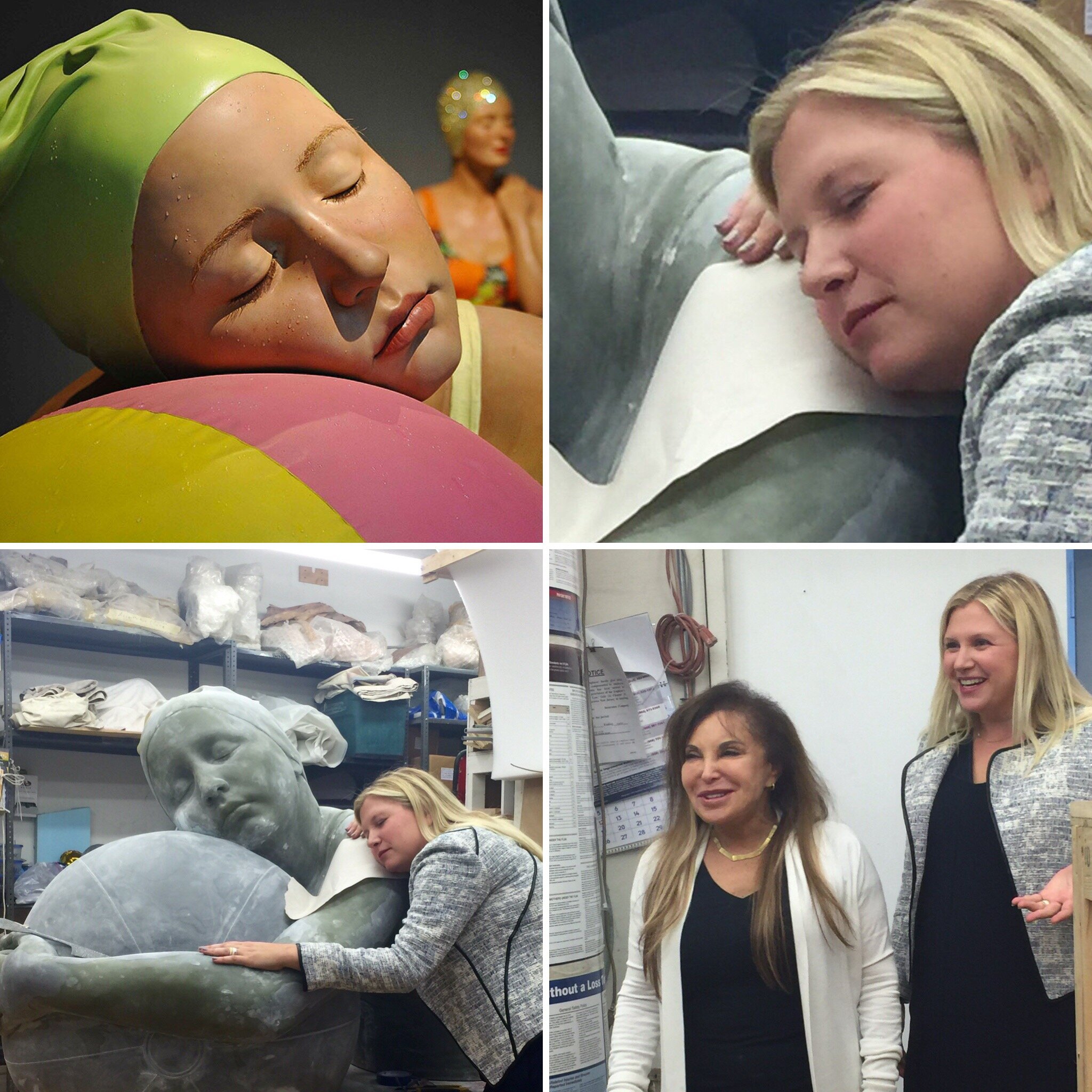
The Real Brooke Posing With Her Sculpture in Monumental Size
All the "Realism's" in Art Explained
Art is generally perceived as a way of detachment from the real-life. It is seen as a key to revealing some invisible meaning in the world that surrounds us. Besides, this is not entirely true for all genres of art. In superrealism, the thin line between reality and art is virtually erased. This happens in sculptures and paintings that these artists create. Many branches of realism focus on producing artwork that resembles a real-life image. Some of them even go further and beyond.
Labeled as a significant advancement of Photorealism, the newly established style still holds some elusive differences from its predecessor. Photorealists aimed to reproduce photographs with utmost precision. Their goal was that the human eye can not differentiate between the original and the painting. At the same time, the Hyper-realists took the technique even further. They have developed ways of including charm narrative and emotion into the image. As the saying goes “Hyper-realism create the atmosphere of surrealism as no one sees the world in such detail.”
Concisely known as Superrealism, the term Hyperrealism stood on the bases of the US photorealistic work of the late 1960s. Still, to create Superrealism, you must go over and above. You have to surpass the current level. This is precisely what Hyperrealism artists did. So, how did it go? Did they stray beyond the line of art, where their work became just an example of superb skill? Or did they blur the lines between art and reality? They have made way for a new hyper-artistic expression.
Difference Between Hyperrealism & Photorealism
The origin of the word Hyperrealism dates back to 1973. Isy Brachot was the one who fabricated the term. He used it as the title of a catalogue and exhibition at his gallery in Brussels. The exhibition involved influential artists like Richte, Gnoli, and Delcol. But, it was dominated by American Photorealists, including Chuck Close, Ralph Goings, Don Eddy, and Robert Bechtel. After the event, the term Hyperrealism was used by painters influenced by the Photorealists. Continuing the roots of Photorealism, the newly developed branch of realism managed to portray the images in an ultra-realistic manner. Besides, it was in contrast with the approach used in the traditional paintings of the late 20th century.
Also, Hyperrealism artists relied comprehensively on photographic pictures as a reference source. Still, they took it one step ahead. They aimed to create a more detailed and definitive rendering. Their artwork often includes a certain amount of narrative and emotion. While Photorealists inclined to imitate the photograph, Hyper-realistic artists struggled to achieve a different pictorial design altogether. They achieve it by integrating an element that is not there in reality. Besides, they intentionally entailed a softer focus on the portrayed topic. This created an impression of a new reality not seen in the original photograph. The portrayed illusions were captivating representations of reality. They were finely enhanced with a fresh layer of vision.
Conclusively, Hyperrealism offers a powerful way to explore our interactions as individuals with ourselves. It also examines how we interact with others in our everyday lives. For this specific reason, artists have the freedom to use Hyperrealism in portraying humans through an array of lenses. These range from the social and political to the psychological and antithetical. They also include the external workings of the human mind and body.
Superrealism is very different than Hyperrealism.
Historically, the word "Surrealism" is derived from the French surréalisme, which literally translates to "super-realism". In this context, it refers to the movement initiated by André Breton. This movement aimed to resolve the contradictory conditions of dream and reality. This resolution sought an "absolute reality" or a super-reality.
Objective: To express the "real functioning of thought." This is achieved by tapping into the unconscious mind and dreams. It remains free from the control of reason.
Distinction: While "Photorealists" superrealism focuses on external physical accuracy, "Surrealist" superrealism focuses on internal psychological truth.