
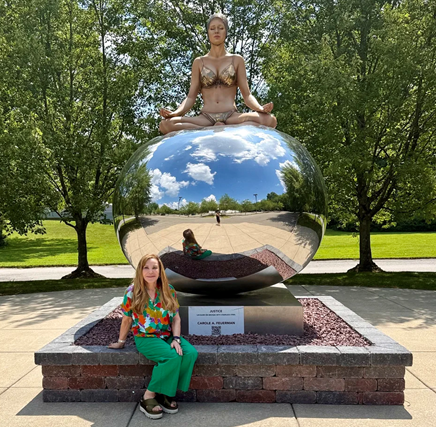
Why Carole Feuerman Public Domain Artwork Is a Must-See in New York
Walk enough blocks in New York, and you'll eventually stumble onto something that stops you mid-stride - a piece of public sculpture that has no business being as beautiful as it is, sitting there between the traffic and the tourists like it's always belonged. That's the effect Carole Feuerman's work tends to have. If you're mapping out Carole Feuerman's public domain artwork New York locations for a weekend of gallery-hopping and street wandering, you're in for something that doesn't quite behave the way public art is supposed to.
A Sculptor Who Doesn't Flinch from Realism
Feuerman built her reputation - and coined a term along the way, SUPERREALISM - on the idea that a sculpture can hold as much psychological weight as a painting or a photograph, maybe more, because you can walk around it. Her figures are startlingly lifelike: the sheen of water on skin, the slight give of muscle, the particular way a body holds tension or lets it go. Decades in, she's still chasing the same questions through bronze and resin - what does resilience look like when it's not performing for anyone? What does quiet strength actually resemble, stripped of drama?
That's the draw behind Carole Feuerman's public domain artwork, New York. People don't just look at these pieces. They stop, they circle them, they come back the next week to see them again in different light.
Public Sculpture as Civic Memory
New York doesn't really need more monuments - the city has plenty. What it benefits from is art that doesn't ask permission to be noticed, art that lives where people already are instead of waiting behind a ticket counter. Feuerman's large-scale installations do exactly that. They turn a plaza or a sidewalk into something closer to a pause button, a place where the pace of the city briefly loosens.
This is part of why Carole Feuerman's public domain artwork New York keeps coming up in conversations about what public art in this city should feel like - not decorative, not incidental, but genuinely capable of shifting how a space is experienced.
A Career That Keeps Expanding
Feuerman's reach goes well past the five boroughs at this point. Her solo exhibition Reborn into the Water has carried her SUPERREALIST vision to audiences abroad, and in Ohio, the Medici Museum now houses two of her monumental works as the founding pieces of what's become the Feuerman Sculpture Garden - a permanent home for that scale of ambition. Closer to home, one of her sculptures is featured in an exhibition at the Nassau County Museum, putting her work in front of a new regional audience.
She's also part of Hyper-realistic Sculpture at the Musée national des beaux-arts du Québec, a survey exhibition tracing the evolution of figurative realism since the 1970s through more than thirty works by twenty-five internationally recognised sculptors - serious company, and a serious statement about where her work sits in that lineage.
And then there's the recognition that tends to arrive late in a career, if it arrives at all: the International Sculpture Centre recently gave Feuerman its Lifetime Achievement Award, an acknowledgement of decades spent pushing figurative sculpture somewhere it hadn't quite gone before. All of it adds context to why Carole Feuerman's public domain artwork in New York isn't just a local curiosity - it's one chapter in a much longer, still-unfolding story.
Why People Keep Coming Back?
Here's the thing about Feuerman's work - it doesn't read the same way twice. Someone technically minded might linger over the tension in a swimmer's shoulder or the sheer difficulty of casting that kind of detail. Someone else walks past and just feels something - a kind of stillness, or recognition, hard to name and harder to shake. That range is rare in public sculpture, which usually settles for one register and stays there.
For anyone spending real time with the city's outdoor art - locals, first-time visitors, collectors who've followed her for years - Carole Feuerman's public domain artwork in New York tends to leave more of a mark than expected.
Where to Go From Here?
Carole Feuerman Studio keeps an ongoing record of her exhibitions, public commissions, and current installations, so it's worth checking before you plan a route through the city. And if your interests stretch past New York, the studio also covers Carole A. Feuerman sculpture in California, tracking her exhibitions and acclaimed work across the West Coast as well.
Frequently Asked Questions
Where can I see Carole Feuerman's public artwork in New York?
Her sculptures appear in select public spaces, museum exhibitions, and cultural venues around the city. Carole Feuerman Studio maintains the most current information on active installations.
What sets Feuerman's sculptures apart?
Her SUPERREALIST approach combines exacting technical craftsmanship with subject matter centred on resilience, serenity, and the physical honesty of the human body.
Is her public art free to see?
Much of it, yes - many pieces sit in open, publicly accessible spaces, though some appear as part of ticketed museum exhibitions or limited-run cultural events.
What has Feuerman achieved recently?
She was named a recipient of the International Sculpture Centre's Lifetime Achievement Award and continues to mount solo and international group exhibitions.
Where can I learn more about her exhibitions and sculptures?
Carole Feuerman Studio is the best source for exhibition updates, installation locations, and further reading on Carole Feuerman's public domain artwork in New York.
From Superrealism to Mythologies: A Bold New Chapter in Sculpture
Art celebrates beauty, form, and technical virtuosity. But many works leave the viewer only looking at the surface, with no deeper story to uncover. The challenge for contemporary artists is to find new ways to create meaning, while keeping the human experience at the centre of their work.
Carole A. Feuerman takes on that challenge with a powerful new body of work that reinvents the role of the human figure in sculpture. Celebrated internationally for her Superrealist sculptures, Feuerman is introducing Mythologies, a series of works that recasts the body as a locus of intersecting memory, mythology, identity, and meaning. This new direction expands her artistic practice, while developing themes that have defined her work for decades.
A New Direction for the Human Figure
For decades, Feuerman has been known for her Superrealist depictions of the human body. Her sculptures capture moments of stillness and psychological depth, offering the viewer a silent but powerful experience.
In Mythologies, the figure takes on a new role.
The body transforms from a mere object of observation into a vehicle of narrative. It has stories, symbols, and ideas that are more than just physical appearance. This change is an important evolution in Feuerman’s artistic process and opens up new avenues for how sculpture can convey meaning.
The Body as a Living Archive
At the center of this new methodology is the idea that the body can hold history, memory, and cultural meaning.
Feuerman paints intricate mythological imagery directly onto the surface of her figures. These images are inspired by ancient Greek mythology and transform the body into a visual text.
The tattoos within the work are not decorative elements. Instead, they function as:
● Narrative structures
● Symbols of transformation
● Carriers of memory
● Explorations of identity
● Reflections on power and responsibility
The surface of the sculpture becomes more than an illusion of reality. It becomes a place where stories are inscribed and preserved.
Mythology Reimagined for the Present
The series Mythologies is inspired by Greek gods and goddesses like Zeus, Hera, Apollo, Artemis, and Atlas.
Rather than read mythology as a remote remnant of history, Feuerman uses these figures as lasting archetypes through which to investigate present-day concerns.
The work deals with themes such as:
● Energy
● Love
● Sacrifice
● Sisterhood
● Desire
● Vulnerability
● Transformation
● Responsibility
In this approach, modern life is understood through the means of mythology. Gods and goddesses are no longer symbols of unattainable perfection. They reflect the complexities that continue to shape the human experience.
Looking Beyond Beauty
Classical portrayals of mythology tend to highlight beauty, heroism, and ideal perfection. In Feuerman’s work, we see another face of these tales.
Beneath the visual harmony of the figures are stories of conflict, ambition, jealousy, betrayal, mortality, creation, and destruction.
The elegance and sensuality of the sculptures may be the initial attraction for viewers. A closer view reveals more and more layered symbolic worlds with:
● Labyrinths
● Heavenly bodies
● Hidden faces
● Serpent
● Temples overrun by forest
● Stairways without end
● Surrealistic imagery
These elements become visual manuscripts that encourage the viewer to look deeper and find new meanings in the work.
Sculpture as Something to Read
What is perhaps most striking about Mythologies is the way it alters the relationship between sculpture and its viewer. Historically, sculpture is an art form that is viewed. Feuerman extends that experience by inviting viewers to engage with the work as image and text.
Her fractured backs and monumental standing figures work on a number of levels. They are physical forms, and they function as symbolic narratives. The viewer is invited to not only see the sculpture, but to interpret the layers of meaning.
Here, the body becomes a psychological and mythic vessel reflecting ancient human anxieties and shared cultural narratives.
Connecting Past and Present
Even though it introduces a new framework of ideas, Mythologies still continues Feuerman's ongoing inquiry into the human condition.
Her mastery of surface and her evocation of stillness are still in evidence. The difference is the addition of a deeper conceptual layer that deals with mythology, psychology, cultural symbolism, and art history.
The result is a body of work encompassing:
● Classical and modern life.
● Material precision and intellectual inquiry
● Personal identity and group memory
● Beauty & Conflict
● Vulnerability and power
That balance allows the work to speak across time and still speak to ongoing conversations about identity and meaning.
A Significant Moment in an Ongoing Career
This new body of work arrives during an important period in Feuerman's career.
Recent exhibitions include Reborn into the Water at the Heydar Aliyev Center and The Voice of the Body at Palazzo Bonaparte in Rome. Her artistic journey is also currently reflected through From Line to Life, an exhibition of drawings from the 1960s at QCC Art Gallery in Queens, New York, and I Am Mine, Without Permission, her solo exhibition at Ethan Cohen Gallery in New York.
In addition, Feuerman was awarded the 2026 Lifetime Achievement Award from the International Sculpture Center. Together, these milestones highlight an artist who continues to expand her practice while exploring new ways to communicate through sculpture.
Conclusion
Mythologies is a significant evolution of Carole A. Feuerman’s artistic vision. The series uses mythology, memory, and the body to create a sculpture as a forum for stories, symbols, and lived experience. It asks the viewer to look beyond the surface and to engage with deeper questions of identity, power, and transformation.
At Feuerman, we believe art can do more than just capture a moment. In works such as Mythologies, we continue to explore the human condition, making meaningful links between history, memory, and contemporary life. Explore how our evolving artistic vision transforms the body into a powerful narrative of identity, symbolism, and transformation.

Why Feuerman Contemporary Art Movements Remain Relevant in an Era of Digital Art

Every generation is convinced it is witnessing a complete transformation of art. Today, that transformation is often tied to technology. Digital platforms have changed how work is shared, discovered, and collected. New tools continue to expand what artists can create. Entire exhibitions can exist on screens. Some artworks never occupy physical space at all.
That endurance helps explain the continuing influence of Feuerman's contemporary art movements. The work does not rely on technological novelty to remain relevant. Instead, it draws strength from something more difficult to achieve and far harder to replace: a direct connection between the artwork, the viewer, and the physical world.
Physical Presence Still Matters
A sculpture asks something different from its audience.
You cannot scroll past it. You cannot reduce it to a thumbnail image and fully understand it. Scale matters. Surface matters. Distance matters. The experience changes as you move around the work, and sometimes the most revealing perspective is not the first one.
Feuerman has built a career around that relationship between sculpture and viewer. As a SUPERREALIST sculptor, her work engages with the human figure in a way that feels immediate yet carefully considered. The sculptures invite attention without demanding it. They reward close observation rather than spectacle.
That quality has become increasingly important in a culture built around speed. One reason Feuerman's Contemporary Art Movements continue to resonate is that the work encourages viewers to slow down. It creates space for reflection rather than distraction.
Relevance Is Not the Same as Trendiness
Feuerman's sculptures have remained significant because they are grounded in ideas that do not expire every few seasons. Strength, resilience, contemplation, and personal transformation appear throughout the work. These themes are neither fashionable nor outdated. They simply remain part of the human experience.
That stability allows Feuerman Contemporary Art Movements to participate in contemporary conversations without becoming dependent on them. The work evolves, but it does not abandon its foundation.
Art that survives changing cultural trends usually possesses a strong internal logic. It knows what it is trying to say. Feuerman's sculptures demonstrate that kind of clarity.
Public Sculpture Continues to Shape Cultural Experience
Gallery exhibitions matter. Museums matter. Public space matters too.
When sculpture enters a public setting, it becomes part of everyday life. People encounter it unexpectedly. They return to it repeatedly. The relationship develops over time rather than during a single visit.
This helps explain the continued significance of Bronze Figure Sculpture in New York associated with Feuerman. Public installations place the work into active environments where architecture, movement, weather, and human interaction constantly reshape the viewing experience.
Feuerman's work does so because it possesses a strong sense of physical presence without becoming visually aggressive. The sculptures feel integrated into their surroundings while maintaining a distinct identity.
That balance is one reason Bronze Figure Sculpture in New York continues to attract both public interest and collector attention.
Why Collectors Continue Paying Attention
Collectors rarely build meaningful collections by following short-term trends.
The strongest collections are usually shaped by patience. They focus on work that continues to reveal something new years after acquisition.
Feuerman's sculptures offer that kind of longevity. The technical precision is evident immediately, but the lasting appeal comes from something deeper. The work balances physical presence with emotional restraint. It feels contemporary without appearing dependent on contemporary fashion.
This helps explain the continuing demand for Bronze Figure Sculpture in New York connected to Feuerman's practice. Collectors are not simply acquiring objects. They are investing in works capable of sustaining interest over decades rather than seasons.
Final Words
Digital art will continue expanding the possibilities of contemporary creative practice. It should. Every generation benefits from new tools and new ways of thinking.
Yet the continuing relevance of Feuerman Contemporary Art Movements demonstrates that innovation alone is not what gives art lasting significance.
Feuerman's sculptures endure because they remain grounded in craftsmanship, human experience, and physical presence. Through exhibitions, public installations, and an ongoing contribution to Bronze Figure Sculpture in New York, the work continues engaging audiences in ways that feel both contemporary and timeless.
FAQs
1. Why do Feuerman Feuerman Contemporary Art Movements remain relevant today?
Feuerman Feuerman Contemporary Art Movements remain relevant through timeless themes, technical mastery, and meaningful engagement with contemporary audiences.
2. How does Feuerman’s work differ from digital art experiences?
Feuerman’s sculptures offer physical presence, spatial interaction, and direct viewer engagement that digital artworks cannot fully replicate.
3. Why is Bronze Figure Sculpture in New York important to Feuerman’s legacy?
Bronze Figure Sculpture in New York highlights Feuerman’s public presence, allowing diverse audiences to experience her work firsthand.
4. What themes are commonly explored in Feuerman’s sculptures?
Feuerman’s sculptures frequently explore resilience, strength, reflection, transformation, and the enduring complexity of the human experience.
5. How do exhibitions support Feuerman Feuerman Contemporary Art Movements?
Solo and featured exhibitions strengthen Feuerman Feuerman Contemporary Art Movements by expanding visibility and reinforcing artistic significance globally.
Why Collectors Continue Investing in Bronze Figure Sculpture in New York by Feuerman
People who collect sculpture seriously tend to slow down over time. Early on, there’s a temptation to react to scale, polish, or whatever dominates the room first. Later, the focus changes. You start paying attention to structure. To restrain. To determine whether a work still feels complete after the novelty wears off.
That shift explains a lot about the continued interest in Bronze Figure Sculpture in New York connected to Feuerman.
The sculptures don’t push for attention. They hold it steadily, which is harder to achieve than most dramatic work admits. In New York, especially, a city crowded with visual noise, that kind of composure carries weight.
Bronze Has No Patience for Weak Decisions
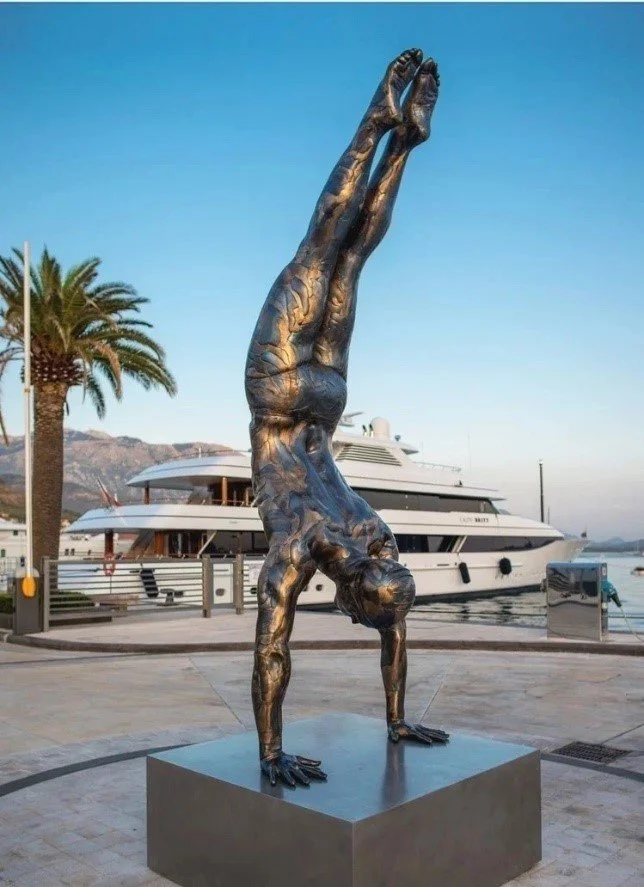
Bronze is unforgiving. Once cast, every decision becomes permanent. Proportion, balance, surface treatment, nothing stays hidden for long.
That’s partly why serious collectors continue returning to bronze sculpture. The material exposes uncertainty immediately. If the structure underneath isn’t resolved, bronze makes sure you notice.
Feuerman’s work avoids that problem entirely. The forms feel settled. There’s precision in the anatomy, but it never drifts into overstatement. The surfaces are handled carefully, without unnecessary texture or theatrical finishes, trying to compensate for weak composition.
For collectors exploring Bronze Figure Sculpture, that level of control matters more than trend-driven experimentation. Sculpture is physical. It occupies real space. You live with it differently than painting or photography. If the form isn’t resolved, the viewer eventually feels it.
Public Sculpture Reveals What Actually Holds Up
Once a sculpture moves outdoors, it loses protection. Architecture competes with it. The weather changes hourly. People encounter it while distracted, moving quickly, barely looking. The work has to establish a presence immediately without becoming aggressive.
Feuerman’s public installations in New York manage that balance exceptionally well. The sculptures feel grounded within the environment rather than dropped into it as decoration. Viewed from a distance, the forms remain clear. Up close, the details hold together without collapsing into excess.
Collectors paying attention to Bronze Figure Sculpture understand the significance of that. Public work becomes a kind of test. If the sculpture can survive visually in an uncontrolled setting, it usually carries lasting strength elsewhere, too.
Why Contemporary Relevance Still Matters
There’s a persistent misunderstanding in contemporary art that technical skill somehow works against relevance. Feuerman’s work quietly disproves that idea.
Discussions surrounding Feuerman's Contemporary Art Movements continue because the sculptures operate in a space many artists struggle to maintain. The work respects figurative tradition without feeling trapped by it. It remains contemporary without relying on conceptual shortcuts or temporary visual trends.
Feuerman’s sculptures don’t ask viewers to decode layers of theory before engaging with the work. The emotional and physical clarity arrives first. Then the complexity reveals itself gradually through scale, posture, proportion, and stillness.
Collectors following Feuerman's Contemporary Art Movements often respond to exactly that quality. The sculptures feel immediate without becoming simplistic. They maintain sophistication without distancing the viewer.
Exhibitions Matter, but Context Matters More
Collectors pay attention to exhibitions, but experienced collectors pay attention to the role the artist plays within them.
Reborn into the Water was presented as Feuerman’s solo exhibition, which matters because solo presentations expose consistency. The work has to sustain an entire environment on its own. There’s nowhere for weaker pieces to hide.
At the same time, Feuerman also has a sculpture featured in exhibitions at the Nassau County Museum. That context shifts the conversation. Featured work enters a broader curatorial structure and still has to maintain its identity alongside other artists.
Final Take
Most trend-driven work ages quickly. Sometimes painfully quickly. Sculpture tends to expose that problem faster than other media because it occupies physical space so directly.
Feuerman’s sculptures avoid that trap because they aren’t chasing immediacy. The work is built carefully, with attention to proportion, material, and visual endurance. Years later, the sculptures still feel composed rather than overstated.
That’s ultimately why collectors continue investing in Bronze Figure Sculpture New York associated with Feuerman. The work remains stable while the surrounding art market shifts constantly.
The same applies to conversations around Feuerman's Contemporary Art Movements. The sculptures continue participating in contemporary dialogue without becoming dependent on fashionable language or temporary aesthetics.
FAQs
1. Why do collectors value Bronze Figure Sculpture in New York by Feuerman?
Collectors value Bronze Figure Sculpture New York for its material durability, public presence, refined craftsmanship, and long-term artistic relevance.
2. How does Feuerman approach contemporary figurative bronze sculpture?
Feuerman combines technical precision, balanced composition, and SUPERREALIST detail to create contemporary figurative bronze sculptures with lasting visual strength.
3. Why are public installations important for Bronze Figure Sculpture in New York?
Public installations demonstrate how Bronze Figure Sculpture New York maintains visual clarity, scale, and presence within demanding urban environments.
4. What role do exhibitions play in Feuerman Contemporary Art Movements?
Solo and featured exhibitions strengthen Feuerman Contemporary Art Movements by reinforcing consistency, visibility, and contemporary relevance within sculpture discussions.
5. Why does bronze remain important in contemporary sculpture collecting?
Bronze offers permanence, structural integrity, refined detailing, and timeless appeal, making it highly respected among contemporary sculpture collectors worldwide.
The Power of Art in Shaping Global Awareness
By Carole Feuerman
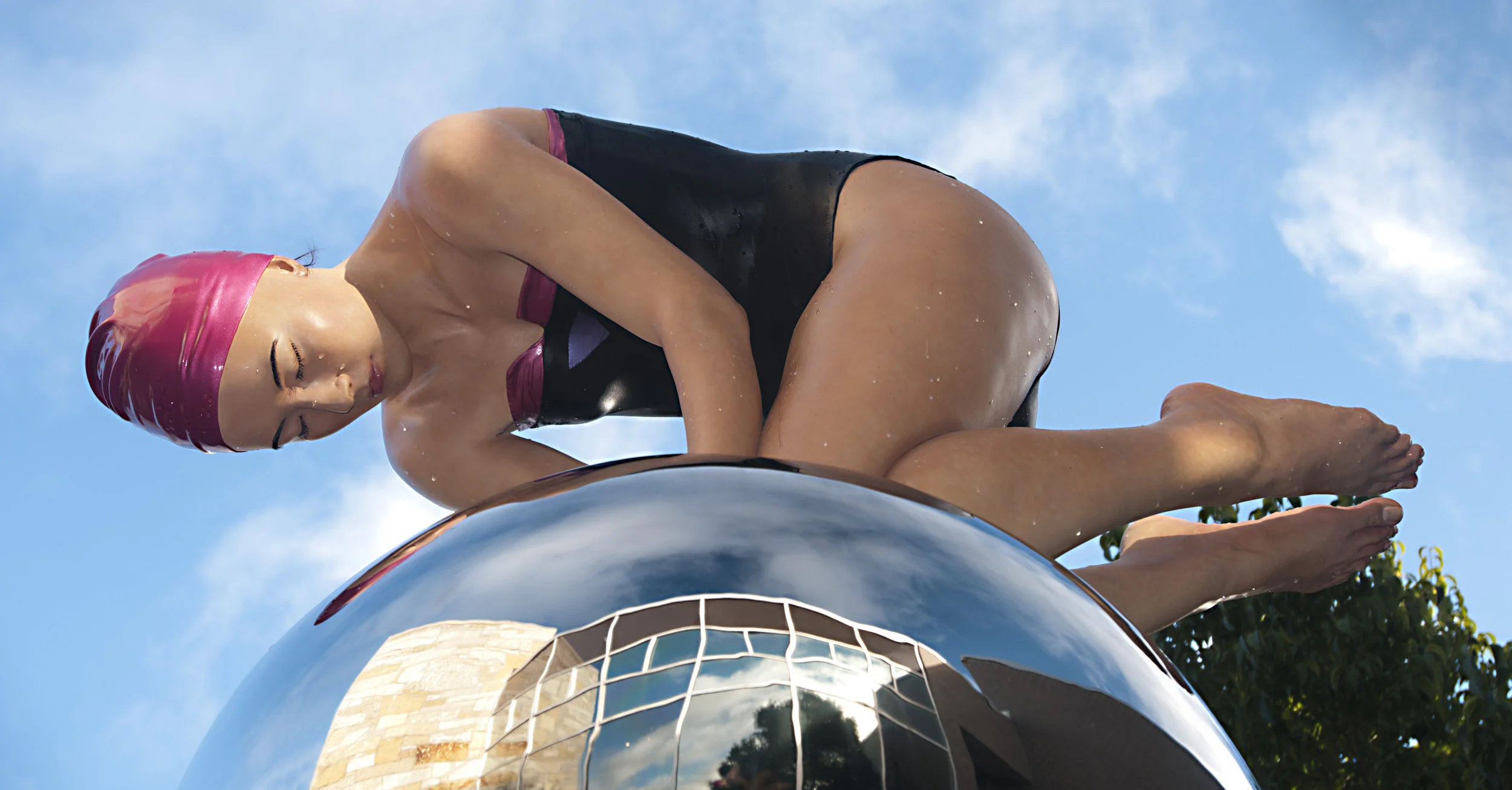
Quan by Carole Feuerman
Art has taken me to many countries around the world. On any given day, I am standing in front of an audience of leaders. I also discuss the construction of my artwork with a viewer just walking by my sculpture. Working as an artist has brought me into contact with people who share both similar and different beliefs. It has introduced me to a vast range of perceptions, and ideas. I have profoundly been affected by participating in these local and global exchanges. They drive me to create art that touches people emotionally.
One of the great challenges facing us today is that we often feel powerless. We struggle when it comes to helping others. We also face difficulties in solving problems. We feel disconnected and incapable of changing world issues, but we must not be quiet. Only through letting our voices be heard can we have a say in shaping our world.
We face a great challenge today. We often feel powerless in helping others. This feeling extends to solving problems. We feel incapable of changing world issues, but we must not be quiet. Only through letting our voices be heard can we shape the world. Only through letting our voices be heard can we shape the world.
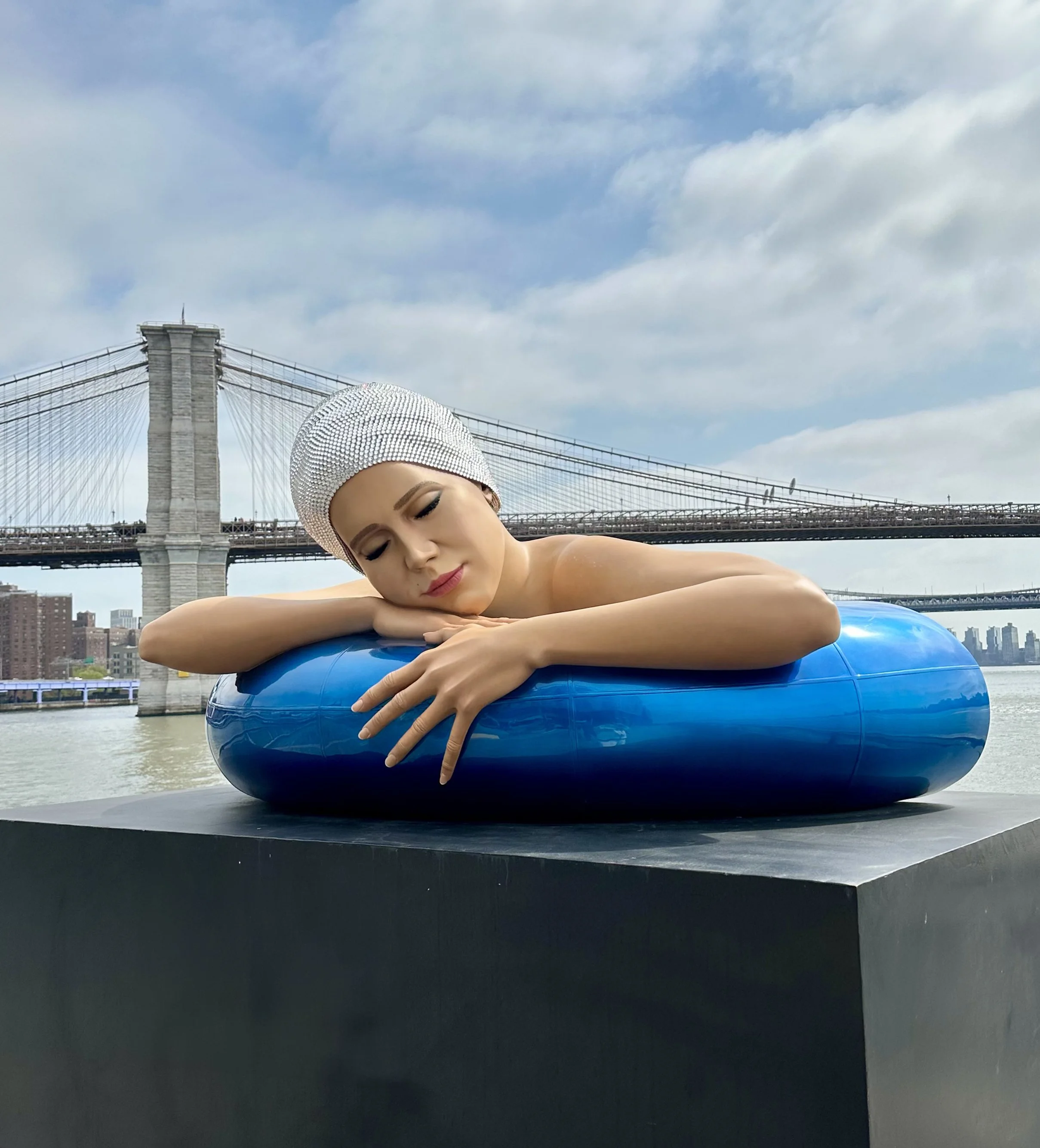
Survival of Serena by Carole Feuerman
There are many artists who used their art to make change. Some of these artists' works be familiar to you, like Picasso. Others, whom you not know, have used diverse ways of communicating their perceptions. “Guernica” symbolizes Picasso’s moving anti-war testimonial. This large-scale painting conveys the chaos and torment of war.
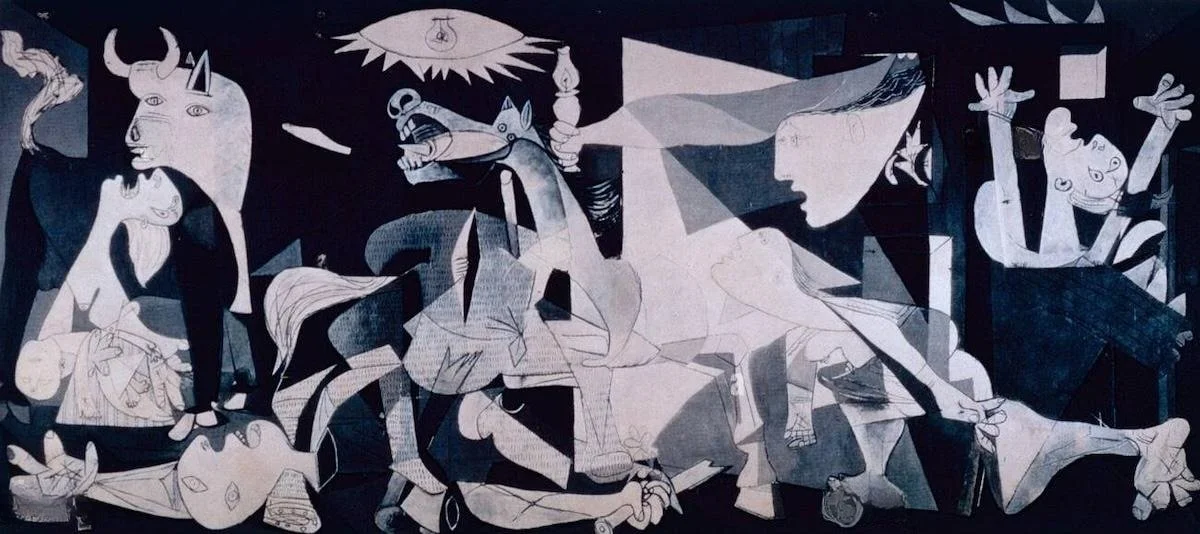
Guernica, Picasso
The Chinese artist, Ai Weiwei, created his works under a repressive regime. He made a temporary studio on the Greek Island of Lesbos. His goal was to bring attention to the plight of the millions of immigrants trying to enter Europe. He famously said,
“There’s no refugee crisis, but only a human crisis”. He posted images on social media of a helpless toddler being washed ashore. He laid his own body down to be photographed. He said that each human life is of equal importance. His photos shocked the world, making people aware of these human tragedies. He is an artist who is effecting change.
The Guerrilla Girls are an anonymous feminist activist group. They exemplify how artists focus on issues to expose gender and ethnic bias. They also reveal corruption in politics. It isn't necessary for any of them to know how to draw. Instead, they find original ways to convey powerful political messages and show their messages in public forums. They wear gorilla masks and use facts, humor, and outrageous visuals. They have made more than a hundred street projects from billboards to performance art demonstrations. They are most famous for circulating a poster that said:
“DO WOMEN have to get naked to have a show at the Met?"
You can also change the world by doing one small thing when you have time. You don't have to do much, the point is-- that you do something! Even a small thing makes a difference. If each one of us did one positive thing, the world would be a better place. Speak up, sign petitions, write letters or sit down with someone who has the power to change things.
Most of us know the feeling of being moved by a work of art. It is a painting or a sculpture. It is a song, a poem, a play, or a dance. When we are moved, we are touched; and then we are transported to a new place. We become aware of things that earlier were unfamiliar to us, situations that we didn’t focus on before. I believe that this is one of the major responsibilities of artists, -- to make people feel and become aware.
Maya Angelou, civil rights activist and trailblazing director, was a recipient of over 50 honorary degrees. She was also an educator. This poet had an incredible impact on society, especially within the world of poetry.
She was the first African American woman to write a script that was made into a Hollywood movie. She was also the first female poet to read a poem at a President's inauguration. Additionally, she was the first female African American to be a cable car conductor.
Her writing tackled race, gender and life. Her poem 'Still I Rise’ carries a powerful message of resilience. This message of strength is still relevant today.
'Imagine' by John Lennon: The ex-Beatle was in his political phase. His hit song encouraged humanity to live peacefully as one group. Its message only became more touching after Lennon's shocking murder in 1980. Today, it continues to be the go-to song for moments of strife and tragedy.

Imagine, John Lennon
When we think of leaders who make a difference, we not think of artists, poets, or songwriters as leaders. But, they have shaped cities and communities. They influence people's feelings for hundreds of years. I started making art when I was six years old. My art has shown me another way to communicate.
In 1979, while I sat at the beach with my three children, I saw a swimmer. She was emerging like a phoenix from the sea with water droplets streaming down her face. This vision took form in the creation of my first swimmer sculpture, which I named ‘Catalina’. She appears to all as a proud survivor, strong and beautiful. A woman who is fearless.
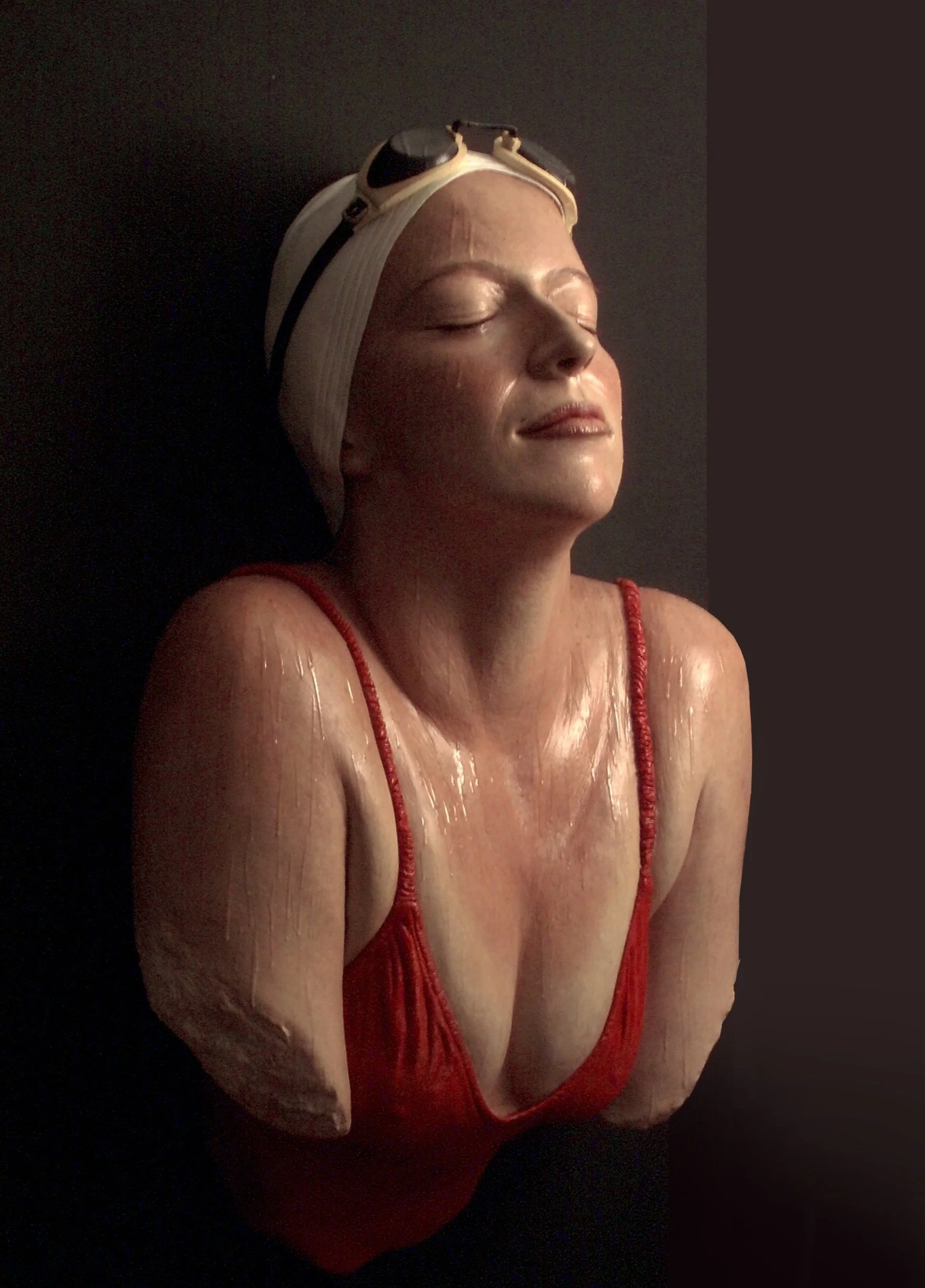
Catalina by Carole Feuerman
In 1981, I was inspired by immigrants that I saw floating from Cuba into Key West. This inspiration led me to make my most iconic swimmer sculpture. It is a contemplative woman resting peacefully on an inflatable tube. This serene and meditative sculpture is called the ‘Survival of Serena’. It was exhibited during the 2005 Venice Biennale in Italy. She was re-named Serenissima after the Island of Venice, the Serene Island.
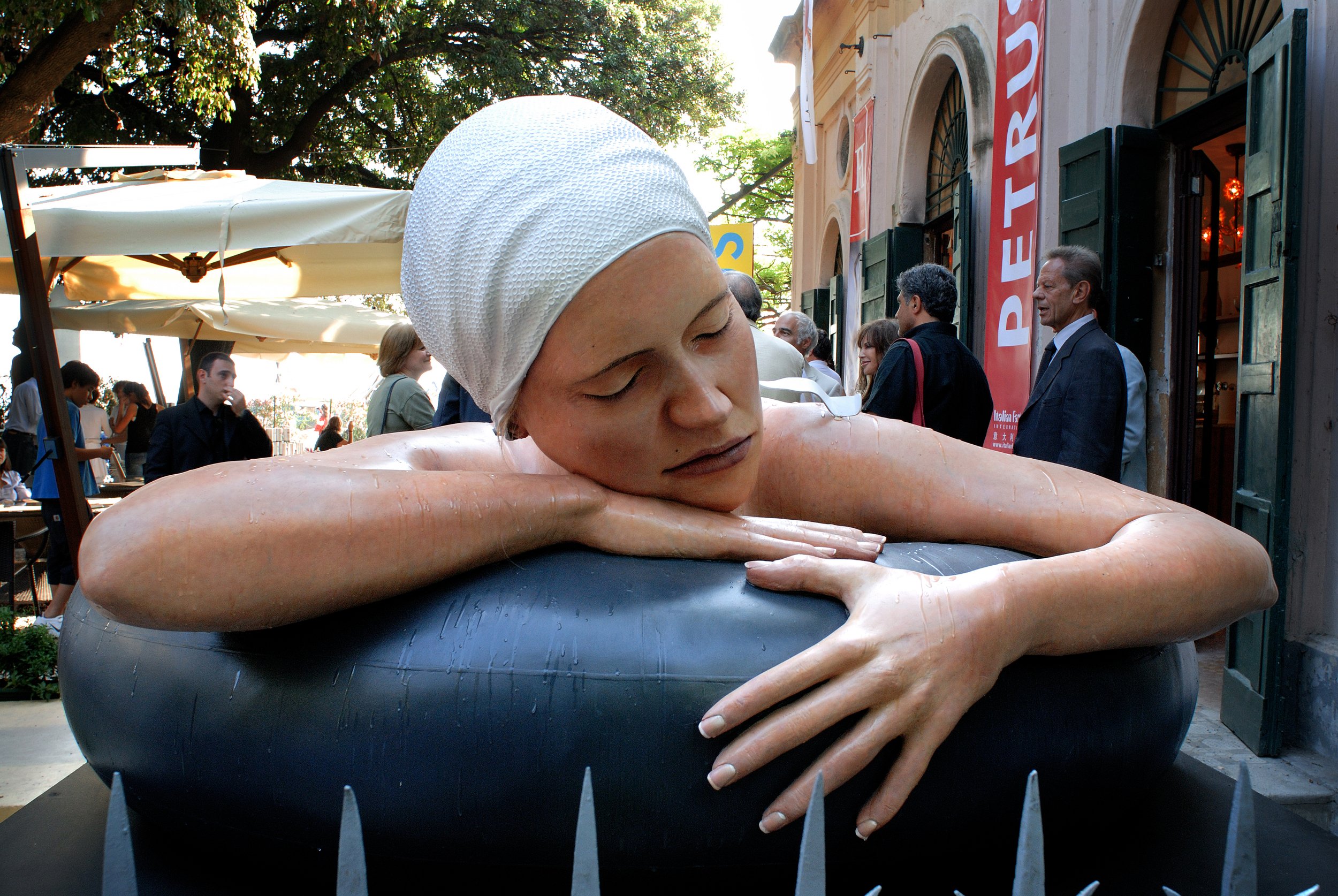
Survival of Serena in the Venice, by Carole Feuerman
I have used my works to be my voice. Images can speak volumes to people and be very powerful. After 9/11, I turned from my super-realistic figurative art and began making bronze spheres.
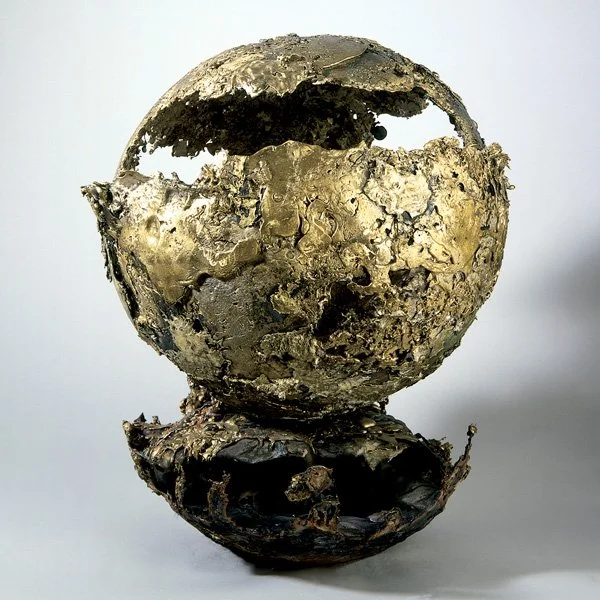
Still Standing by Carole Feuerman
In my sculpture ‘Still Standing’, I show that despite the fragmentation and empty areas, we remain one world. These parts represent bombings and violence. Yet, we are still here!

Seen but Not Heard by Carole Feuerman
“Seen but Not Heard” is a sculpture portraying a young girl with her eyes closed and her mouth taped shut. She is bound as if she is not capable of being heard. In front of her is a bowl with no food in it.
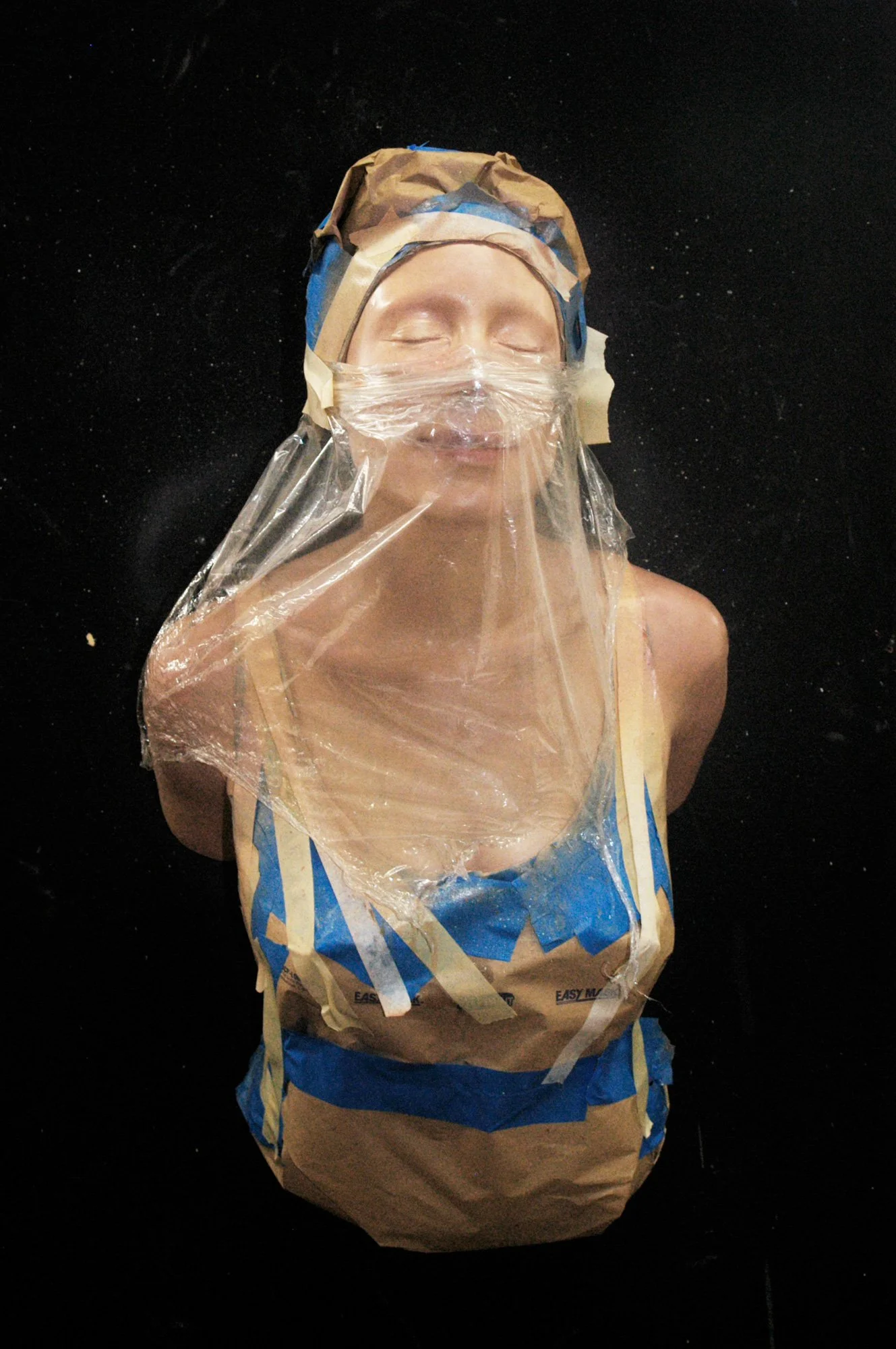
It Seems by Carole Feuerman
In ‘It Seems’, we see the plight of too many women. These women are neither allowed to be seen nor heard. They feel like they are wrapped in cellophane and paper like objects to be bought or sold.

Chrysalis & The World by Carole Feuerman
My most recent sculpture, ‘Chrysalis & The World’, I show a woman in meditation, praying for world peace and tolerance. She is seated on top of a polished stainless-steel sphere that shows the world. When the viewer looks into the sphere, they see themselves.
I have participated in Art Biennales all over the world. These fairs join nations together, showing the best of their country’s art. This year, I have the honor of exhibiting 10 of my sculptures during the Venice Biennale in Italy. The show is called Personal Structures, Crossing Borders. This fittingly titled exhibition will be visited by more than ½ a million people. They will come from all over the world. Unfortunately, only 35% of this year’s artists in the exhibition are woman. To date, no major international exhibition of contemporary art has achieved gender parity.
What world do you want to live in?
Can you imagine a world without art, a world without creativity?
Art motivates us to transform our thinking into saying and doing. Art is not an exclusive club. You can join in. It's free. These days, we are focused on achieving materialistic things and making money. Now is the time to focus on making our voices heard.
Each and every one of you can engage in art and claim your place in history. You may not realize it. When you make a souffle or even an omelet, you make creative choices about what to include in your dish. In a way, you have now become an artist.
At this critical juncture, I believe artists have an obligation to speak through our work. You’ve all heard the saying, ‘a picture is worth a thousand words’, but art is even more than that. Art teaches, it heals, and it influences people’s opinions. Art opens cultural borders and helps us get to know each other, transforming our differences.
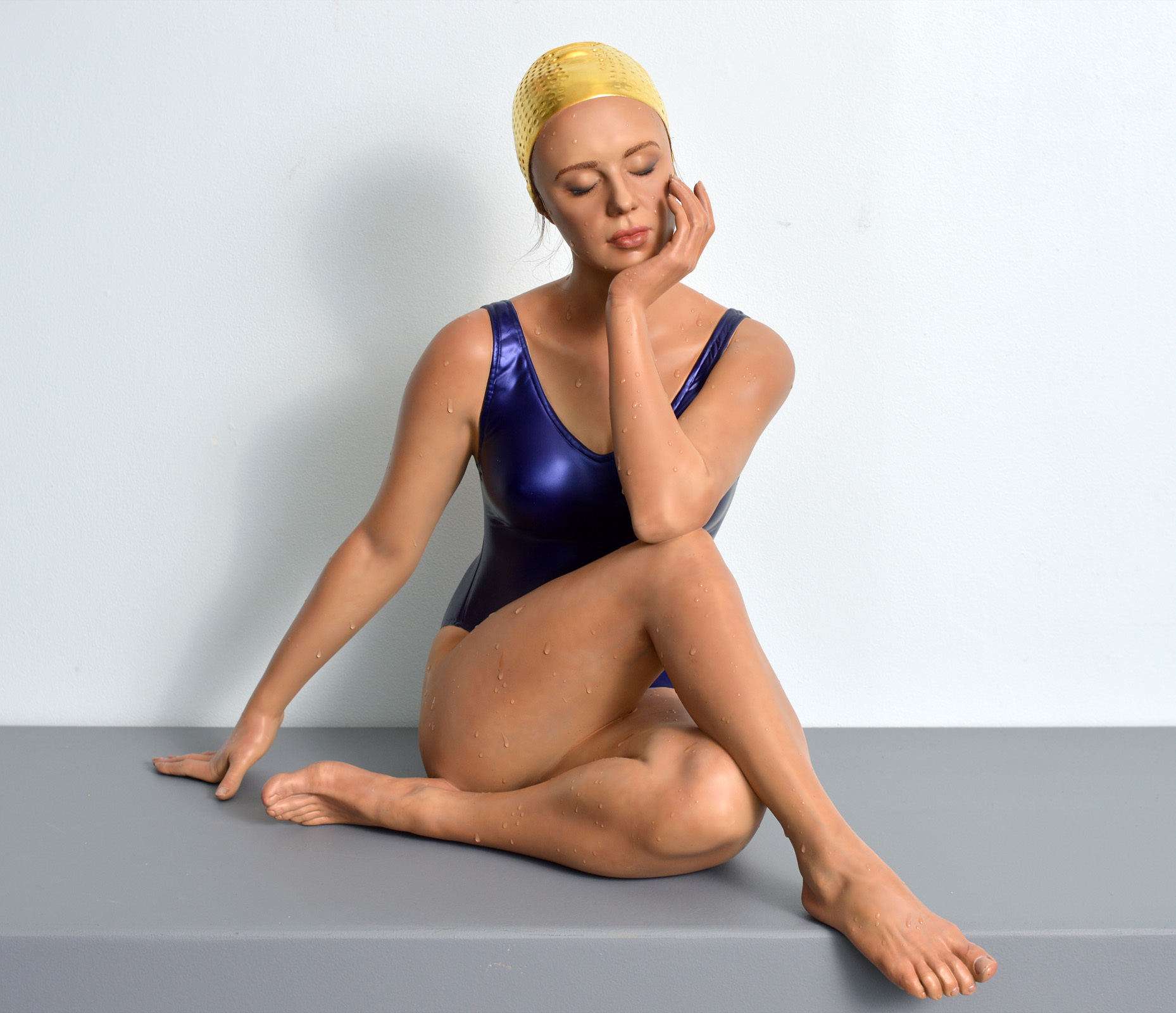
Contemplation by Carole Feuerman
And why do we love images so much?
One side of the human brain dedicates itself to visual processing. Our love of images lies with our cognitive ability to pay attention. Our encounters with art, and with others over art, can help us to be more tolerant. They allow us to recognize with one another. Encounters with art expand our notions of who we are. They show us that individual engagement in the world has actual consequences.
Ultimately, each of us must keep the courage of our convictions to meet the extraordinary challenges that confront our world. As you saw in my work, it’s about survival, balance, courage and strength. These are the messages that can bring global change. Each of you in this room can appreciate and understand this, and that’s why you are making a difference. That’s why you are here. You are critical to our survival as a global community. We must start now to change the thinking of the past. We should speak about the problems of the current day. We should discuss the infinite possibilities of the future. The moment we find our voice, we are set free!
As you saw in my work, it is about survival, balance, courage and strength. These are the messages that can bring global change. Each of you in this room can appreciate and understand this, and that's why you are making a difference. That's why you are here. They are critical to our survival as a global community.
You must start now to change the thinking of the past, and speak about the problems of the current? And the infinite possibilities of the future. The moment you find your voice, YOU ARE SET FREE!
Art Improves Brain Function

There is enough scientific evidence that proves art improves brain functioning. It has an impact on brain emotions, wave patterns, nervous system, and can actually increase serotonin levels. Besides, art can change any person's outlook and the way they experience the world.
Years of research have provided a sufficient amount of data to prove that arts education influences everything from overall academic achievement to social and emotional development and so much more. Besides, research has proven the arts enhance neural systems that produce a wide spectrum of benefits ranging from numerous skills to creativity and improved emotional balance. Simply put, the arts are invaluable to our proper functioning individually and as a society as well. This article highlights how arts can improve brain functioning and well-being
1) Growth Mindset
Through arts, people develop skills like grit, resilience, and a growth mindset which can help them master their craft, do well professionally and personally. Building a growth mindset with the help of arts and self-assessment can help succeed in life. Besides, setting realistic expectations and goals for people in general and then correlating the work done and results, people can begin to shift their motivation, resulting in a much healthier and more sustainable learning process.
For students to truly grow and progress, they must have a balanced view of internal motivation and external motivation. In the early stages of learning art forms, students will participate in this activity because it is fun (intrinsic motivation). However, this motivation will only make them move forward until now, and then their development will start to slow down or even stop. At this point, rely on external motivation to continue student growth. This may take the form of auditions, tests or other assessments
2) Communication
Someone might say that communication might be the most important aspect of existence. Our world is built through communication. People learn a variety of communication skills through the study of art. Throughout the whole musical ensemble process, they must learn to communicate verbally, physically and emotionally with their peers, conductor and audience. Likewise, actors must not only convey spoken words to the audience but also express more intangible inner emotions to the script. Art is a way of expression that can transform thoughts and feelings into a unique form of communication-art itself.
3) Improved Cognition
Research links music learning with "language memory, second language pronunciation accuracy, reading ability, and executive function" in youth (Frontiers in Neuroscience). By immersing students in art education, you can attract them to a highly complex and multifaceted job that combines many subjects (such as mathematics, history, language and science) and at the same time as having a unique connection culture.
In conclusion, art is an effective way to stimulate the mind, and anyone can learn it. It's a process of learning to create ourselves and experience the world with a new lens. Also, it supports the bigger view of life: symbols, beauty, storytelling, and allows us to be present at the moment and keeps the magic alive.
Unlocking Creativity: The Artist's Mind

LIVING YOUR LIFE AS AN ARTIST
Some people believe that many artists lead punishing lives. They need to invest their skills and planning. They also invest money, time, and principles to a great extent. Some even are not recognized or appreciated in the way that they expect. It is incredibly important that you understand that artists are talented than you ever imagine. They can easily transform their imagination into a real picture. They draw it as a painting or on the canvas. Their life can be hard, but only they know what to make out of it. They can understand our culture, our traditions, and our history more than we can. They are more like scientists. The only difference is that a scientist experiments with different theories and natural elements. Artists experiment with their thoughts, ideas, imagination, thinking, and colors. Lots and lots of colors. By using colors effectively, they can illustrate important life aspects. They also evoke sensations in our thoughts.
The Creativity of an Artist
Artists push beyond the usual norms. They start to question their own assumptions that no one else has questioned. They question their own thoughts and ideas, and then generate creativity. They can easily blend a lot of colors to give shape to their creativity. An artist can look around and take inspiration from every object. They see inspiration in every surface, every scene, and every color. Even a situation that appears interesting can inspire them. Artists will never stop learning about art. They constantly think about blending creativity into their work. Art now encompasses many forms and types. This diversity can easily confuse an artist on how to approach so many different aspects. The artistic process works on the questions of art, culture, tradition and their own thought-processes.
The World and its Problems
As we know, the world has many problems like scarcity, poverty, hunger, economic conditions and globalization. Many of these tough problems even question our thought of mind and culture. Many of us would ignore such problems and live our life, but an artist sees these problems differently. Though they can't do much to change it, they still like to give it a picture. They create something out of it so that people would at least see it. This encourages people to do something about it collectively. With the artist’s work, the general audience can question their own thoughts. They can think about how they are playing their part in the world. That is what an artist does; they invoke thought of reasoning in people. They introduce new knowledge to the cultural realm with their artworks. They provoke people to contemplate it.
Making someone think about anything other than themselves is difficult. An artist achieves this with creativity. They also use a blend of different colors. We live in a time full of color, images, and pictures. There is language, videos, stories, and music. There is a diversification of cultures and traditions. An artist brings out the positivism of these elements. They make something meaningful out of them. The artist can then motivate a reason of thought about culture. They can inspire reflection on spiritual, political, emotional, or even economical aspects of our world.

How to Understand Meaning and Creativity in Art
By Alex Chaban
Art is a dynamic phenomenon that keeps on changing, first as a visual in the artist’s mind and then as a creation. However, art can only be created by those who have a sense of it, so it is necessary to find and define the meaning and creativity in art. Finding meaning and creativity in art is not an easy task, as much has already been inquired about it through artistic expressions. One must understand its implications through creativity, aesthetic forms, imagination, color, and expression. Defining the meaning and creativity of art is difficult, as many people can view it based on their perception. Many philosophers, theorists, critics, artists and muscians have argued about having the best approach to understanding art, meaning, and creativity.
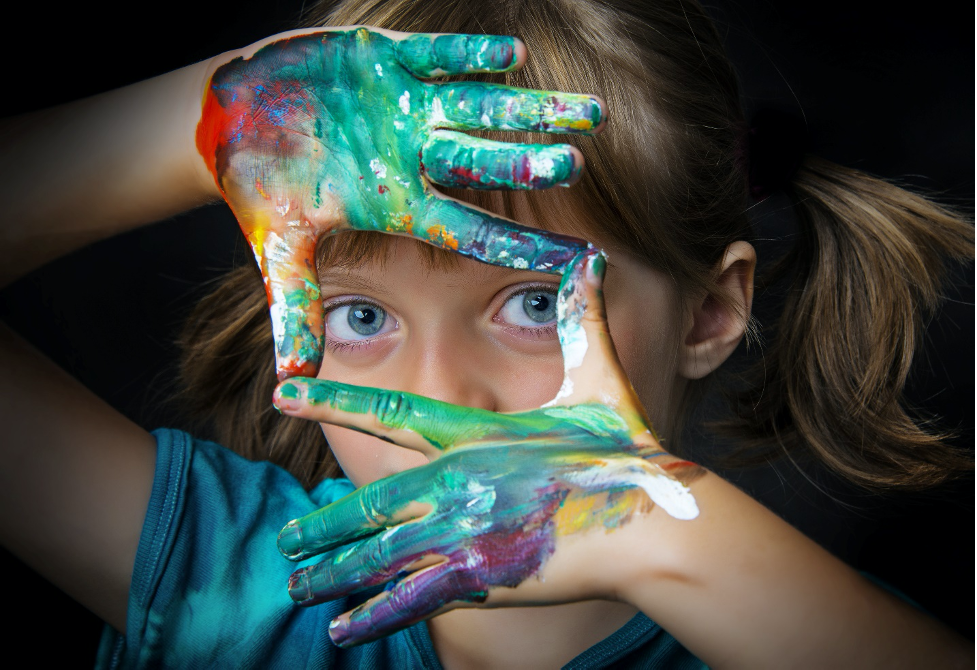
Famous Artists of the World
It still emerges as a question in contemporary literature. True artists who have a greater understanding of art can attempt to determine the meaning and creativity of art, as they have spent their entire lifetime to view and understand art. Artists like Carole Feuerman, Andy Warhol, Pablo Picasso, Vincent van Gogh, Leonardo da Vinci, Michelangelo, Henri Matisse, Jackson Pollock, Edvard Munch, Claude Monet, Edward Hopper, Frida Kahlo, and many more. These artists can easily express their art and define its meaning and creativity. Art is always meant to be appreciated even when it may appear controversial or disturbing, as there is always a hidden meaning behind it. Art can only be appreciated by those who can understand and enjoy art. The best way to appreciate art is to understand its meaning and creativity from a different perspective, and not just look like different shades of color aesthetics.

Does Art Need to be ‘Understood’ or ‘Enjoyed’
Most people argue that art needs to be enjoyed rather than understood. Just like life is simply meant to be experienced. However, the more we understand anything, the more we learn how it can enhance our experience. To have a deeper understanding of art, its meaning, and creativity, we need to understand that art is more than just a visual expression. It can also represent an idea, experience, imagination, a thought-provoking subject, or even invoke motivation for the viewer.

It can be made by using different techniques, materials, technology, or even ideas. More importantly, an artist needs to have the ability to bring his thoughts, ideas, and imagination onto the canvas, a patch or a paper, through the use of different materials. Mere novelty is not enough. He or she must have something unique, relevant or unlock a new way of imagining or thinking. It can be difficult, but true artists find it to be intriguing to bring their imagination and ideas through the use of art. Many have accomplished so much more than just money through their artworks. Many of us may even think that creating art only belongs to those naturally gifted. However, every one of us has some level of creativity and potential or even some unique talent that we may not know. You just need to find and exploit it, just as an artist does with their paintings. One must understand to find its meaning and purpose.

Defining Meaning and Creativity in Art
Most of us can view art as a product, but true artist finds their work to have a profound meaning and can easily define the creativity behind it. Art is not something that can be created by merely thinking about it. There is a thought process behind it. For example, the famous painting, Mona Lisa, by Leonardo Da Vinci, is believed to be painted between 1503 and 1506. The painting itself has captured the fascination of millions of people around the world. The artist claims that he wanted to capture the enigmatic facial expressions of Mona Lisa’s smile, but there are more hidden messages and creativity behind this painting. Many have argued that the painting reflects the idea of establishing a link between humanity and nature.

In contrast, others think her smile is fake or forceful, yet it appears to be alluring. Many historians, philosophers, and thinkers have argued over its hidden meaning and creativity, but none have achieved its conclusion. Yet, the painting has inspired millions of people to still look and think upon it. As art is taken as an expression, it can give out a unique meaning and creativity.
To learn more about art and it's meaning and creativity, I would recommend the book ‘For my Legacy’ by the artist Carole Feuerman, who has motivated many people around the world through her story and art. She tells us about how she was inspired to become an artist as she loved paintings. She also tells us about how she never gave up on her dream to become an artist, as she started painting on the floor and decided to nurture her gift since the age of ten by perfecting different art techniques. She has founded the Carole A. Feuerman Sculpture Foundation, and her artworks are owned by 18 museums. She is also one of the three founding members of the hyper-realist movement that began in the late ’70s and still exists today.