
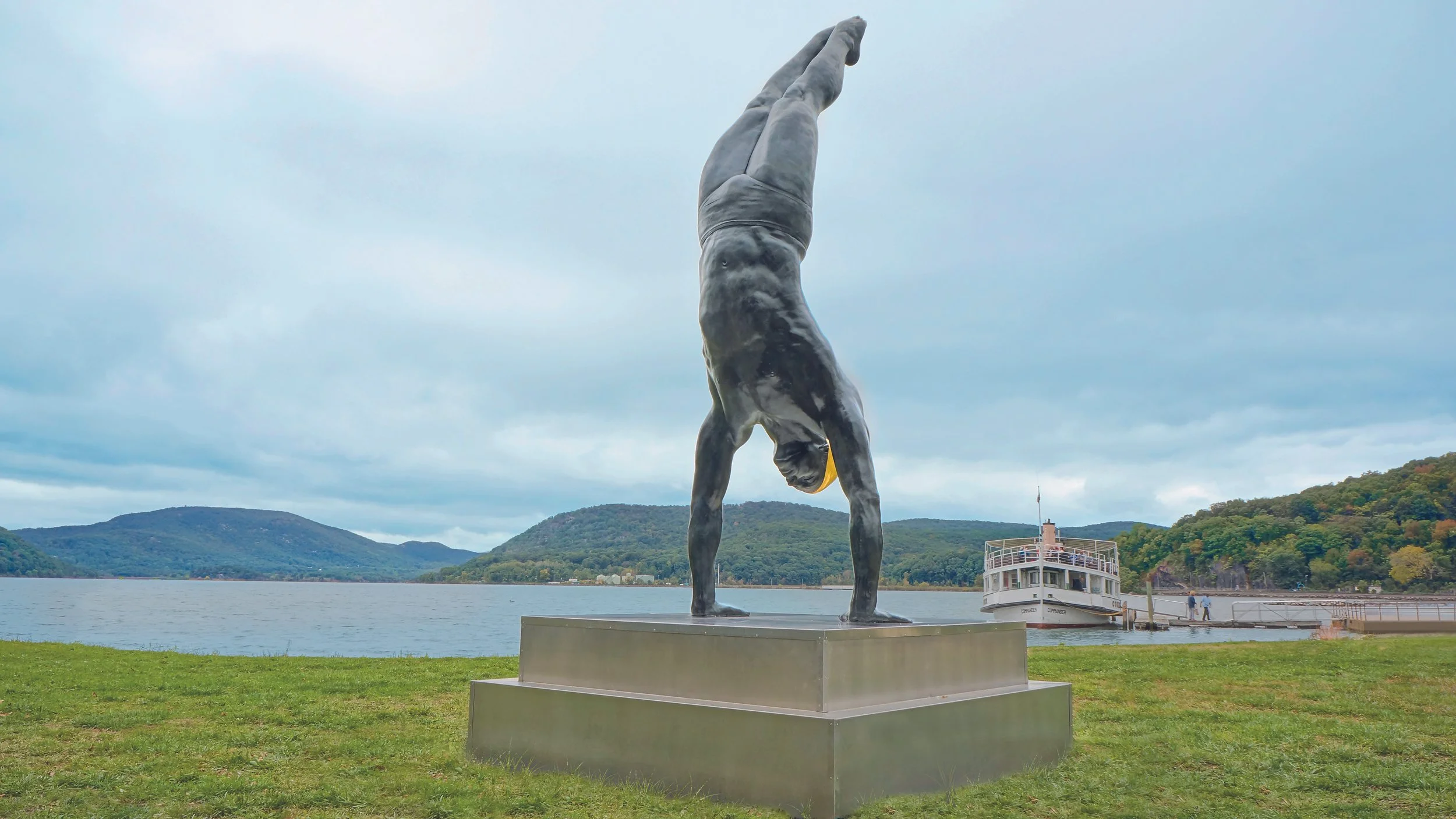
The Golden Mean | 2012 | 150 x 54 x 38 in | Bronze
There is a split second, just before someone speaks, when they first stand in front of one of our sculptures. Their eyes narrow slightly. They lean in. Sometimes they circle the figure without realizing they’re doing it. That instinctive movement tells you everything about the power of realistic art. It doesn’t ask politely for attention. It commands it.
At Feuerman Studios, we work within superrealism because the human body, when rendered with absolute precision, holds an undeniable presence. Not an illusion. A presence. The skin, the subtle weight shift in a hip, the quiet tension in a hand, these are not decorative details. They are the architecture of emotional response.
The Body Recognizes the Body
The reaction to realistic art is physical before it is intellectual. Viewers don’t begin by analyzing. They respond. The brain processes familiarity at speed: this is a human form. The scale is believable. The surface feels almost warm. That recognition creates a bodily awareness. People adjust their own posture. They lower their voices. They step closer to examine a droplet of water or the line of a shoulder.
Stillness is crucial here. Our figures are composed. They are not theatrical or exaggerated. They hold quiet, suspended moments. That restraint is intentional. Movement is implied but never overstated. The result is tension, the kind that makes a viewer stay longer than expected.
Within public art in New York, that stillness becomes even more striking. The city is velocity. It’s noise layered over noise. A composed, contemplative figure interrupts that rhythm. The contrast is powerful. You can feel it in the way pedestrians slow their pace, even if only for a breath.
Precision Creates Intimacy
Superrealism demands discipline. Every surface decision matters. The treatment of skin, the rendering of water, the placement of gaze, none of it is casual. In works like Reborn into the Water, the interaction between body and water is controlled and intentional. The water rests against the form. It does not overwhelm it. The moment is suspended, steady.
Our new series, The Tattooed Body, extends this idea of precision into narrative. The tattoos are not decoration; they are identity etched onto the surface. They introduce personal symbolism while maintaining anatomical clarity. Within realistic art, that layering deepens engagement. Viewers don’t just see a body, they read it.
And reading a sculpture is a curious thing. It requires proximity. It asks for time. That’s why placement within public art in New York matters so much. The work meets people where they are, on sidewalks, near water, against the skyline. It becomes part of daily experience rather than a distant museum encounter.
Scale and Environment Shift Perception
Scale alters psychology. A sculpture slightly larger than life changes how you stand before it. You feel its weight. You measure yourself against it. That exchange, viewer to figure, is immediate.
In outdoor settings, especially within public art in New York, light becomes a collaborator. Sunlight moves across the surface, sharpening details or softening them depending on the hour. Architecture frames the body. Sky reflects against polished elements. The sculpture does not shrink within the city. It holds its ground.
That grounded quality is essential to realistic art. Without structural integrity, without absolute control of proportion and material, the illusion collapses. Superrealism does not tolerate approximation. It requires commitment from the first armature to the final surface finish.
Emotional Recognition, Not Spectacle
The emotional response viewers describe is rarely dramatic. It’s quieter than that. They speak about calm. Strength. Reflection. A sense of shared humanity. The figures are self-contained, yet open. They do not perform. They exist.
This is where realistic art becomes something more than representation. It becomes recognition. The viewer identifies with posture, with vulnerability, with resilience. In a city as layered as New York, that recognition feels communal. Strangers pause together. They occupy the same moment of stillness.
Final Thoughts
People respond physically and emotionally to realistic art installations because the human form is universal. When crafted with discipline and intention, it bypasses abstraction. It speaks directly.
Within public art in New York, that directness feels necessary. The city moves relentlessly. Our sculptures do not. They offer composure in the midst of motion. They invite viewers to become aware of their own presence, how they stand, how they breathe, how they look.
At Feuerman Studios, we understand that response is not accidental. It is built through superrealism, through material knowledge, through respect for anatomy, and stillness. Realistic art is not about imitation. It is about presence. And when that presence enters public art in New York, it transforms space, quietly, firmly, and without apology.
FAQs
1. Why do viewers react physically to Realistic Art installations?
The human body recognizes lifelike form instinctively, prompting posture shifts, closer observation, and physical engagement before conscious interpretation begins.
2. How does Realistic Art function within Public Art in New York?
In New York’s fast-moving environment, realistic art introduces stillness, encouraging pause, reflection, and heightened awareness amid constant urban motion.
3. What role does superrealism play in emotional response?
Superrealism relies on precision and restraint, allowing viewers to emotionally connect through quiet presence rather than exaggerated gesture or spectacle.
4. Why is stillness important in Feuerman’s sculptures?
Stillness creates tension and focus, inviting viewers to project meaning while experiencing calm, balance, and sustained attention over time.
5. How does the environment affect perception of Feuerman’s public sculptures?
Light, scale, and surrounding architecture interact with the sculpture, reinforcing realism and deepening emotional connection within public space contexts.