Learning about Sculpture by Carole

By Alex Caban

Sculpture has not really received the attention it deserves compared to painting, photography, and modern Even intellectuals and philosophers of art do not recognize how difficult it is to make a sculpture art. Sculptural art stands out in its own classical and contemporary forms. Those who make it, know how difficult and delicate it is to make figurative sculpture art of a person. People over the years have raised questions about its ontology, representation, and person character. Thus they should truly appreciate the painstaking process it takes to make a truly remarkable sculpture art worth admiration.

Blog 5 real Picture1.jpg

 The History of Sculpture Art

 Before the 20th century, sculpture art was widely received and admired by people, especially in the Vatican City of Rome, where different sculptures portrayed angels and demons for the representation of religion. It became more than a tradition as all sculptures in the western world where the representation of celebrities. More and more sculptures began to be made as freestanding objects. As its progression grew, sculptures were made on famous old buildings and altarpieces. Sculptures are mostly made out of durable materials such as stone, bronze, plaster, and wood. 

Blog 5 Picture1.jpg

 Much Deserved Recognition

 As modern forms of art began to make their mark in digital, photography, materialism, sculpture making practices began to slow down over the years. Many sculpture statues and abstract works of Barbara Hepworth and Louise Nevelson are still appreciated but represented imaginary objects. The most intriguing thing about sculpture art is that they represent a world of its own. A single sculpture can define a whole story, whether it is an imaginary object, a historical figure, or a celebrity. 

blog 5 Picture2.jpg

 They are even famous for describing an environment, as we explore the meaning through them. Some sculptures can even tell secret coded messages or mysteriously point at something of importance, as shown in famous movies like National treasure and Angels and Demons. However, the treatment and the making of a sculpture is exceptionally delicate and expensive. Many people aim to distinguish the traditional divisions and importance of sculptures from paintings and architecture. Some have even discredited it as performance art. However, sculptures more than just figurative statues or three-dimensional non-art objects. They define a whole new meaning of art by its complex contours and should be held in high regard regarding its admiration and appreciation.

Blog 5 Picture3.jpg

Sculptures should be distinguished separately from other forms of art, as they represent historical traditions, information, and practices of the previous era. There is a sense of nostalgia attached to them, as they can give the pleasure of view and touch. To learn more about the importance of sculpture art, it is better to read the book Carole A. Feuerman: 50 Years of Looking Good by the famous artist Carole Feuerman. As a renowned artist to have made some interesting and modernistic sculptures herself, she has given an in-depth view and perception of art and how she became an artist. She also provides her best interpretation of how she came to know about her passion for art and understand it deeply.

How Digital Tools Revolutionize Modern Art by Carole

front.jpg

THE MODERN FORM OF ART – DIGITAL ARTWORK

Nowadays, traditional artwork has triumphed with the modern form of art, digital artwork. Many artists are beginning to learn and show their skills through software and drawing sketches with a digital pen. Still, digital artwork can take several forms, including photography, charts, graphs, artistic diagrams, and much more. Nowadays, you can create artwork with a camera, scanner, or even imaging or editing software, rather than using your hand. Universities have begun to teach how they use creative software rather than artist practice drawing or sketches.

Digital artworks are taking their place in marketing and advertising. As a result, the value for traditional artwork is slowly diminishing. Traditional artworks have been developed, transformed, and varied through the stages of history and culture. They represent various cultures and civilizations before us through paintings, sculptures, architecture, stone works, and much more. Art is growing more advanced and sophisticated with the use of digital software and computer programs. The world is witnessing rapid developments in all spheres of life. As a result, people need more sophistication and modernism in art. In the old days, it was all about the skill and craft of an artist. They made the best use of their hand and mind to create unique pieces of artwork. Nowadays, more and more people want to create easily without wasting much time. They rush creativity with the use of software applications, as the trend is becoming more fast-paced.

The Use of Art Related Software Applications

Software applications used to draw art can influence more means of creativity. You can use a diverse range of color codes. You can also draw simplistic or complex shapes or lines within a matter of seconds. Specialized materials and tools are right in front of your computer screens. With tremendous developments in software applications, anyone can draw digital artworks to make them look appealing. It can easily bring about changes in the composition or color of digital artwork. It can also change the whole aspect and redraw what needs to be adjusted with just a few clicks. More with the revolutionized form of art, more and more people can integrate electronic sensors. They can also use lasers, digital pens, and green screens. This makes art look more compelling. 

With the use of software applications and modern digital artworks, many artists have gotten involved. This includes those who weren’t that skilled with their hand in drawing or sketching. It has also enabled artists to enter into a new paradigm of art. On this new stage, an artist can replace their manual or traditional skills. They can use their imagination or references in a contemporary manner.

Sophistication in the Field of Creativity

Technological contributions in digital hardware and software have greatly influenced art. As a result, artists are now doing innovative and distinctive aesthetic experiments. They use these innovations to create more complex artworks. First, they draw or sketch it with their computer applications. Then they give it a complex blueprint form. Finally, they go for the real thing. Such software tools and applications help satisfy their artistic desires. Users need to learn the software. This helps them understand its limitations and capabilities. Some are calling the use of software applications the development of another form of digital creativity.

The Significance of Appreciating Art in Our Lives by Carole

By Alex Chaban

Portrait1+2+copy.jpg

Some people not think that art is important. They would not appreciate it or recognize the efforts needed to create awe-inspiring pieces of artwork. Art can be intriguing and inspiring. Yet, some people do not appreciate it. They have lost their sense of creativity or fascination with colors. When you think of art, you envision the famous works of artists like Leonardo da Vinci, Michelangelo, and Raphael. You would also think of Pablo Picasso, Van Gogh, Warhol, or Claude Monet. 

The Importance of Art

Art has been around for generations and decades. Their form and representation have changed from time to time, but their importance, appreciation, and creativity are still admired. Did you know that art was even before when men discovered fire? We have forgotten that art has been around since the early days of the cavemen. No doubt that art has played a very significant role throughout our history. It has shaped our culture, our traditions, and our way of life. Art is also a part of our daily lives. Everything that we do, wear, or achieve is inspired by art in some way. Art revolves around us in many ways. We can take inspiration from art from nature, colors in the sky, landscapes, flowers, animals, people, and our culture. The clothing we wear, the movies we see, or the video games we play are all inspired by art. The cars we drive are influenced by art. The pictures of ourselves are influenced by art. The pictures in books or magazines we read are influenced by art. It's important to appreciate this art around us. Appreciating art and artists is important because art continues to be a part of our lives and our future. It is also related to the future of many generations to come. 

Art in the Early Days

Men in early civilizations appreciated art. They used it to communicate with one another and even with the world. We know that early men didn’t use art as a formal written language. Still, they did use drawings to depict their everyday lives. These drawings conveyed important information, emotions, and hopes. We can still look at those artistic images and appreciate them in a way. It gave us a clear understanding of their daily struggles and successes. It also provided a chance to connect and empathize with learning about their culture.

Appreciating and Admiring Art

SPZ_2051.jpeg

Art is not meant to be overlooked. People need to appreciate it. They should admire it. They should be inspired by it. Art can teach us many things that we can’t even imagine. Art should be observed for its true essence. It reveals who we are and what we can aspire to become in the eyes of the beholder. Art can stimulate thought and reason. That is why it is known to have brought a revolution in many cultures. It can stimulate ideas. It allows viewers to draw their own emotions in their thoughts. Viewers can pull from their personal experiences when they meet them. Art can be influential in a way as it naturally develops critical and innovative thinking skills. That is why children in their early ages are inspired to draw and paint. Art also teaches us many important qualities such a listening, observing, and responding to multiple perspectives. That is why art should be admired and appreciated by people from all different walks of life. There is much more to learn about art and artists by reading the real-life account of an inspiring artist.

How to Write A Great Press Release? by Carole

By Carole Feuerman

Image via Pexels

A great press release will contain:

  • Find Your Angle. Every good news story has an angle

  • Write an attention-grabbing headline. 

  • A “nut graph” to kill for: The first paragraph with 2 to 3 sentences must be brief, concise and newsworthy. 

  • Strong Body Paragraphs with Supporting Details

  •  Multimedia: photos, video and the like – a must have for showcasing your news and artwork

  • Good contact information – not just contact information, but the contacts of people who will answer the phone and respond within the hour to your email query.

  • Links

  • Great attention getting photos

  • A Great Quote - Include Quotes. The art of writing a press release involves giving the end reader the impression that you got the quote directly from the source, not from the press release.

  • Statistics and other data – People love numbers, which make your story more credible and interesting, and impresses

  • A compelling story 

  •  Your Contact Information

Google keywords throughout your site, in all places possible, under photos, in all titles, in all descriptions, essays, contact, and anyplace else. Only use a few key words to repeat all over and they should be relevant to who you want to attract and what your release is about. 

Remember to Add your contact information, website, and ways to reach you

You’ve heard countless advice on words to avoid in press releases, like “leading”, “ground-breaking” and “best.” A Reporter’s Bullshit Meter will ring loudly at the sight of these words. There’s no doubt your press release will be diminished. I won’t belabor the point. I urge anyone writing a press release to understand who reads their prose. Consider how credible your words are. You’d be surprised how many reporters stop reading a press release if there are too many superlatives.

Carole A. Feuerman: Touching Eternity Beneath the Surface by Carole

Lucky New Yorkers in the know – and even luckier visitors – are directing their friends to Sea Idylls, Carole Feuerman’s Monumental Exhibition on Park Avenue between 34th and 39th streets in Manhattan.

Nine of Carole’s lifelike, stunning sculptures lined Park Avenue, perfectly complementing the iconic NYC street. As Carole gave her artist talk to a group of guests and art world professionals in front of Bibi on the Ball, cars were stopping to yell out, “I love your work!” It felt like a red carpet moment that very few artists have the privilege to experience in their lifetime. Another epic location – Art Egypt in Giza – is in the works.

Carole’s amazing drive and ambition doesn’t stop with art world “luxury brand” success. She wants to leave a legacy, in other words, to be written into the art history canon as one of the original founders of hyperrealist sculpture – from the 70s and 80s – along with her contemporaries: Duane Hanson and John De Andrea.

A woman’s perspective of an art movement was sprinkled into our conversation (her early work was embedded in the foundation of superrealism. Her first champion was Malcolm Forbes, the founder of Forbes magazine (who is described on Wikipedia as “an avid but idiosyncratic collector”). Recognizing her talent and potential, Forbes became her first major collector and bought out her first gallery solo show, Sculpture, Sensuality, Fragments Part 1 at Hansen Gallery in the Fuller Building of Midtown Manhattan.

SYNOPSIS OF AN INSPIRING AND TRANSPARENT INTERVIEW WITH CAROLE FEUERMAN

Click on image to enlarge

CAROLE’s EARLY INFLUENCES

Carole’s grandfather and grandmother were influential, supportive parental figures, “The things they taught me I could understand.” Her grandfather was a self-made entrepreneur running one of the first yellow cab companies in Brooklyn. She reminisced about the Liberty Ranch in upstate NY, where she grew up with land, horses, a lake, and family houses close to one another. Carole shared happy memories about a dollhouse her grandfather built for her, riding horses with him, and a time when he cut off his pants to get in the lake with her (even though he couldn’t swim). He believed in her talent and helped her with her first art studio. Actress Esther Williams – famous at that time – taught Carole how to swim, foreshadowing the future content of these Sea Idylls sculptures.

THE DENTIST’S OFFICE

In the late 70s, while life-casting with polyester resin, the sink was overflowing from Carole’s studio into a dentist’s office below. The secretary from the dentist’s office knocked on the door and announced they were getting wet, and also high from the fumes. Carole was evicted and upset until her grandfather’s response was “own your own property and don’t take partners”. He helped her acquire an auto body garage as her own studio.

FAME AND FIRST LIFE CASTS

“My sculptures were not about celebrities, although I was exposed to celebrity culture with my album covers. I was an illustrator to pay my way through the School of Visual Arts. I wanted to learn how to life-cast, and I made a sculpture for National Lampoon Magazine and another androgynous body cast for a magazine cover article called The Age of Androgyny. Gender fluidity was becoming more mainstream through music and art in the 80s.”

THE SCOOP

When Carole wanted to learn how to cast in resin, she secretly hired Ben Bianchi (Duane Hanson’s figure model). Ben said she should start small with body part castings, so she started with her own body. Ben, who was working with Malcom Moorely –a famous photorealist painter – suggested they get his opinion. To avoid “the boy’s club” and Duane Hanson finding out about her collaboration with Ben, Malcolm Moorely came down to critique the pieces in the trunk of her car.

Snorkel was actually her first swimmer, and Malcom Forbes bought the sculpture (also insisting there would be no other existing copies). Snorkel went to Fiji Island, and Carole, due to the originality agreement with Forbes, needed to create another swimmer. She called the next one Catalina (named after an island in California); she made an edition of three. Catalina became the original avatar of the ideal. Survival of Serena – inspired by immigration – followed in editions of nine. Carole, ambitious and ready to compete with “the boy’s club,” took Serena to Ivan Karp at OK Harris gallery in Soho (the Pace or Gagosian of that time). Serena evolved as she became happier after 50, into the glamorous, post-Pop Art version she is today.

WATER AND EROTIC ORIGINS

“People always think that I love swimming, but I really liked the ocean – the breeze, jumping in the waves, and water’s healing properties. I learned my lesson that the world wasn’t ready for my first body of work, my erotic fragments, especially in a gallery in Fort Worth (TX) in 1979.” After her disappointment with Rated X (rated PG by 2023 standards), Carole decided to do the least erotic art, by focusing on leisure sports.

Her second show, Sculpture, Sensuality & Spiritualism, Fragments, Part 1 at Hansen Gallery in the Fuller Building in Manhattan, introduced the swimmers. Malcom Forbes, her first major collector, bought the original erotic series and Snorkel. “When I tried to be edgy like the men, it wasn’t cool.” The world wasn’t ready for a sculptor creating erotic art from the female gaze, but Forbes was hooked. When an artist and a collector or dealer are on the same controversial page, it marks moments in art history ahead of their time.

THE BOY’S CLUB

Ivan Karp at OK Harris gallery represented Duane Hanson and John De Andrea, while showing Carole at OK Harris West. “I heard that Duane was caught looking very closely at my work, and I knew he was threatened by me. He and John were known, and I was not.”

AUTOBIOGRAPHICAL LEGACY

Catalina was the beginning, a symbol of strength and bravery, what a woman aspires to be in order to push through life’s challenges. “Serena grew as I grew, and that was very important.” Her sculpture, Balance, recently transformed into Justice. Society’s need for balance evolved into a need for justice. The pieces change while the concept remains. The work is about the issues that women face.

Conceptually, the idealized becomes relatable. Superrealism isn’t real. Carole’s Superrealism is a fantasy of women’s aspirations, but underneath is a story of survival, perseverance and an artist’s hustle for visibility and the right to be written into art history.

© Amanda Wall (8/28/23) – Special for FF2 Media

LEARN MORE/DO MORE

Click here to visit Carole’s website.

For more links, visit Carole’s Wikipedia page.

Click here to see photos of swimmer turned actress Esther Williams.

CREDITS & PERMISSIONS

Sculptor Carole A. Feuerman in front of Bibi on the Ball on the opening day of her solo outdoor public art show on Park Avenue in Manhattan. (4/27/23) Credit: © Milo Hess / ZUMA Press, Inc. / Alamy Stock Photo. Image ID: 2PTCC44

Middle Photo: Courtesy of Carole Feuerman Studio. All Rights Reserved.

Bottom Photo: Carole Feuerman on Park Avenue with Pisces = Photo by Amanda Wall. Approved for legitimate by others use as long as link to this page is provided in user’s credits.

Turning Your Artistic Passion into a Thriving Business by Carole

Image via Pexels

Building a business from a creative passion requires more than just talent. It involves careful planning, understanding market demands, and implementing strategies that ensure long-term success. From legal considerations to pricing strategies, each step plays a vital role in turning artistic work into a profitable venture. By taking a structured approach, artists can transition from creating for enjoyment to running a thriving business that reflects their vision and goals.

Define Your Market and Specialization

Establishing a successful creative business begins with a clear understanding of what sets your work apart. Identify the specific style, medium, or subject matter that defines your artistry and appeals to a particular audience. Research similar businesses to assess the demand for your niche and determine how your work fills a gap in the market. This clarity will help you connect with the right customers and stand out from the competition.

Navigate Legal Requirements

Turning a hobby into a business comes with legal responsibilities that cannot be ignored. Register your business according to local regulations, ensuring compliance with tax requirements and any necessary licenses. Consider business structures like sole proprietorships or LLCs to protect your personal assets. Taking these steps early will help you operate legally and avoid potential issues in the future.

Develop Your Brand and Business Plan

A strong brand identity makes your work recognizable and memorable to potential buyers. Choose a business name, create a professional logo, and establish a consistent aesthetic across all marketing materials. A business plan should outline your goals, target audience, pricing strategy, and financial projections. This plan serves as a roadmap, helping you stay focused and make informed decisions as you grow.

Use Video Marketing to Expand Your Reach

Videos provide a dynamic way to showcase your artistic process, share behind-the-scenes content, and engage with potential customers. Short-form videos work well for social media, while longer tutorials or time-lapse recordings can highlight your expertise. A compelling video strategy can help build trust with your audience and drive more interest in your work. To enhance the professional appeal of your content, consider using a free video editor that allows you to add audio, change your video speed, animate elements, and more.

Organize a Dedicated Creative Space

A well-structured workspace improves efficiency and allows for uninterrupted creativity. Designate an area in your home or studio that is free from distractions and equipped with essential tools and storage solutions. Keeping your materials organized ensures you can work efficiently and meet customer demands without unnecessary delays. An optimized workspace contributes to both productivity and professionalism in your business.

Set Competitive Pricing

Pricing artwork or creative services fairly requires a balance between market standards and the true value of your work. Factor in material costs, labor, and overhead expenses when determining prices to ensure profitability. Research competitors’ pricing structures while considering the uniqueness and quality of your work. Offering multiple pricing tiers or limited-edition pieces can attract a broader customer base without undercutting your worth.

Strengthen Your Business Knowledge

Beyond creative talent, running a business requires strong management and strategy skills. Learning about budgeting, customer relations, and operational efficiency can help you navigate challenges and scale your business. A degree in business management can help you develop your knowledge of business, strategy, and management, along with learning about leadership, self-awareness, and self-assessment. If flexibility is a priority, consider exploring a degree in business management online, which allows you to build expertise while maintaining your creative work.

Leverage Social Media for Growth

Social media provides a powerful platform for building an audience and driving sales. Regularly posting engaging content, interacting with followers, and utilizing relevant hashtags can increase visibility. Consider collaborating with influencers, participating in online art challenges, or running giveaways to expand your reach. Engaging consistently with your audience helps build brand loyalty and encourages repeat customers.


A successful creative business is built on thoughtful planning, continuous learning, and strong customer connections. Making informed decisions about branding, pricing, and marketing strengthens sustainability and growth. As artists develop their skills in both business and creativity, they gain the tools needed to navigate challenges and seize new opportunities. By taking the right steps, turning a passion into a profession becomes a rewarding and achievable goal.

 Written by Tanya Lee

Learn more about Superealist American sculptor and author Carole A. Feuerman by visiting her website today!

The World That Was, The World That Is by Carole

My sculpture, Brooke with Beach Ball

My sculpture, Brooke with Beach Ball

We are living at a time that life seems surreal, and I ask myself if I’m imaging this. For the first three months of the pandemic, I sheltered in place at home. Seemingly overnight, the entire fabric of my daily life had been turned upside down. And yet—between trying to order groceries online, keeping up with the news, and by refreshing the New York Times homepage, it was important that I kept myself optimistic, energized, and entertained (and, perhaps, a little distracted). 

Staying occupied during the pandemic

Staying occupied during the pandemic

That didn’t work out too well. After a few days I was bored, so I bought a 500-piece puzzle and watched a lot of TV. I couldn’t focus enough to read or work from my computer. Then I got to thinking…no one is at my art studio in Bushwick, so I don’t think it would hurt if I drove there, parked my car inside, and started to create again, and that’s exactly what I did. I immediately had more energy, and started to feel alive again. 

My new sculpture, Eyes Open

My new sculpture, Eyes Open

My eyes were open once again, but now I saw things I’d never seen before. A pandemic worldwide, looting and breaking windows, violence against protestors, violence against the police, and the threat of American Democracy from a corrupt president and his followers from the far right, white supremacists, and the unthinkable now corrupt Republican Senate. 

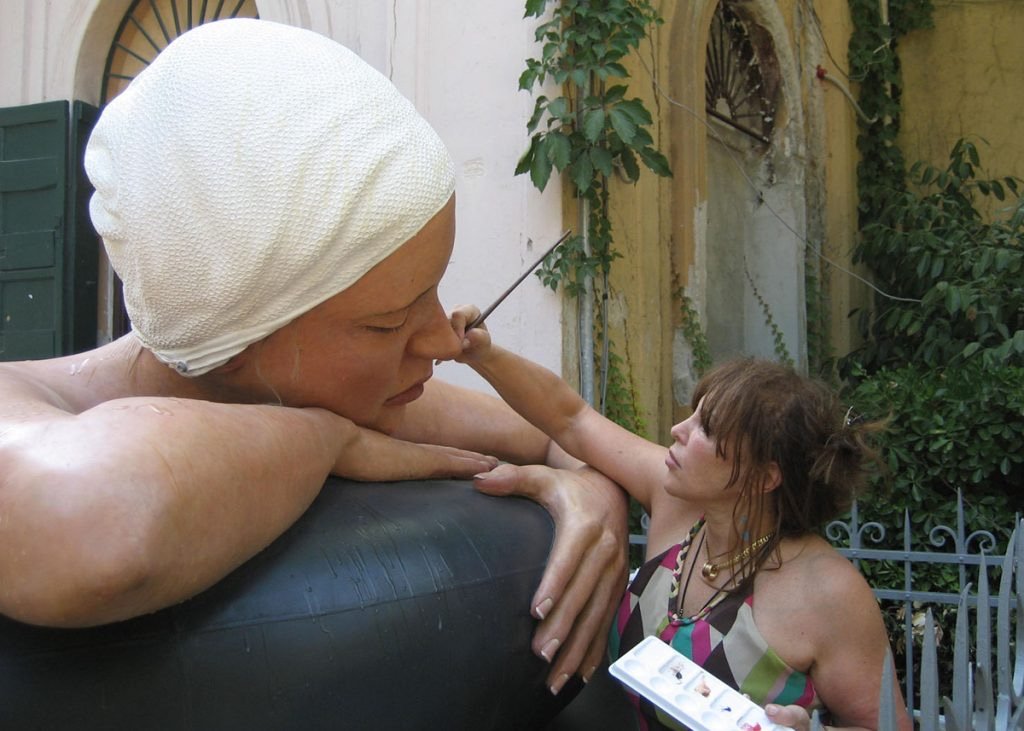
In Venice placing finishing touches on my monumental sculpture, Survival of Serena

In Venice placing finishing touches on my monumental sculpture, Survival of Serena

Art is me, and I am art. I get physically sick when I don’t work. Bringing people together, inspiring, soothing and sharing: these are the powers of art, the importance of which has been made emphatically obvious during the Covid-19 pandemic.

A video interview in London during my solo exhibition at BelAir Fine Art

A video interview in London during my solo exhibition at BelAir Fine Art

In January, I had a lot of deadlines, scheduled shows, and no time. Now I have time and no shows.  How does an artist keep going when the gallery system that supports her seems on the verge of temporary collapse?  Every curator, gallery director, and member of the art world seems to be home. I think the only benefit of this is that it’s time for a reset, a reprieve of the expectations that the art market puts on artists to produce, and to have and to share everything we make.  I’m fine making work in my own bubble because I make art for myself, regardless of whether I show it or not. 

The organized art world has responded beautifully to the lock-down and social-distancing protocols that are keeping people away from physical spaces. Art fairs like Art Basel and Art Dubai have gone online, and numerous galleries all over the world have responded to this new reality with online viewing rooms. The pandemic has closed museums and cancelled concerts, plunging many cultural institutions into uncertainty and immediate financial loss while also threatening a long-term effect on the arts. 

At the Met, Pandemic Era

At the Met, Pandemic Era

Ticket sales at museums account for a smaller percentage of total income than they do at opera houses or dance companies, yet already the carnage is mounting. The Metropolitan Museum of Art, with a princely endowment of $3.6 billion, has a projected loss of $100 million; institutions with smaller reserves are drawing down fast, and may never reopen. In a matter of days, the world of contemporary art went from a reverberate global network to a ghost town, sheltering in place as the coronavirus endangered our cities and our livelihoods. Like every other sector, art is having to go digital.

Video conferencing is the new norm

Video conferencing is the new norm

For artists, the show must go on, and Zoom is their venue.

Children Can Learn Self Confidence Through Art by Carole

IMG_0026.jpg

HOW CAN CHILDREN LEARN TO DEMONSTRATE THEIR SELF-CONFIDENCE IN LIFE?

Raising self-confident kids is one of the greatest aims of the parents.  Focusing to develop their competence, skills and a strong sense of self-confidence provides a solid foundation for their learning and development. Moreover, it improves their health and psychological well-being. Knowing how to encourage your child and staying clued in on what to say when they look to you for guidance means a lot to growing kids. It helps them to trust their abilities and discover their potentials. It implies parents to keep motivating and encourage their children from young age to make efforts for the things they may not be physically or mentally ready to try.

Parents want their children to be the best at everything. They want them to be smarter than any other child. They want them to do things sooner than other children. They convince their children to take chances by saying things like: “You can do it!” “It’s easy!” “Don’t be afraid!” “Just try one “I know you can do it!”  If they fail, they keep elevating their spirit and encourage them to try again. With time and encouragement, all children overcome their fears. They begin to develop their self-belief in themselves. They are convinced they can do anything. They are full of confidence over their abilities. The words of encouragement from other immediate and extended family, relatives and friends boost their stronger sense to accomplish the goals they desire. Even when children become adults, they look up for their parents for guidance at every turn and juncture of their life. They hope that the parents will give them the best advice as they used to give them during their childhood. They count on their parents for their future success and relate them as the best role model in their life.

IMG_E9055.jpeg

Some ideas to nurture your child’s self-confidence

  • Strengthen your child’s sense of his family, culture and community. For example, show your child family photos and share family stories, take part in community or cultural events like religious festivals, and encourage your child join a local sporting club or interest group, or join as a family

  • Encourage your child to value being part of your family. One way to do this is by involving your child in chores. When everyone contributes to the smooth running of the household, you all feel important and valued

  • Encourage your child to have friends over to your house, and make time for your child to go to their houses

  • When you spend quality time with your child you let your child know that they are important to you. Doing things together as a family can help strengthen a sense of belonging and togetherness in your family, which is also good for your child’s self-esteem.

  • Develop family rituals such as a story at bedtime, a special goodbye kiss or other ways of doing things that are special to your family. Let your child help you with house chores. For example, your preschooler could help you set the table for dinner

  • Plan some regular one-on-one time with your child, doing the things they enjoy the most. This could be their hobby, playing sports, baking cakes or cooking favorite dish

Brooke's Play.jpeg

Appreciating their achievements help them feel good. Statement such as, Well done!’ builds their self-esteem. Continuous support and acknowledgment enhance their self-belief that paves the way towards attainting bigger goals in life.

Teach your child that failing is a part of learning. If they face a problem, encourage them to think calmly, listen to other people’s points of view and come up with possible solutions to try. This builds their decision-making skills and helps them to choose wisely.

Keep special reminders of your child’s successes and progress. You can go through them with your child and talk about your special memories, and the things he has achieved.

To know more about how children can build their self-confidence to achieve their loftiest goals and passions in life, read the book, ‘Carole A. Feuerman: 50 Years of Looking Good’ by Carole Feuerman. She as an artist, was able to define and explore her passion since childhood because of how her parents raised her. The book teaches us that if you want to be successful, you have to believe in yourself. You must have confidence in yourself and make effort to achieve your milestones in life.